The Two Premium Paver Options for LA
When clients ask me for the best paver material, the conversation always comes down to two contenders: travertine and porcelain. Both are premium, both look stunning, and both cost significantly more than standard concrete pavers. But they behave very differently underfoot and over time.
After installing tens of thousands of square feet of both materials across LA County, I have strong opinions backed by real-world performance data. Here's what I tell every client.
Travertine: The Natural Stone Classic
Travertine is a natural limestone formed by mineral deposits. It's been used in construction for thousands of years—the Colosseum is made of it. In LA backyards, it's prized for its natural beauty and one critical property: it stays cool underfoot, even in direct San Fernando Valley sun.
- Cost: $28-45/sq ft installed in LA (2026 pricing)
- Heat absorption: Stays 15-20°F cooler than concrete pavers in direct sun
- Lifespan: 20-30+ years with proper sealing
- Maintenance: Requires sealing every 2-3 years
- Look: Natural variation—no two pieces identical
- Common finishes: Tumbled, honed, brushed, chiseled edge
Porcelain: The Modern Performer
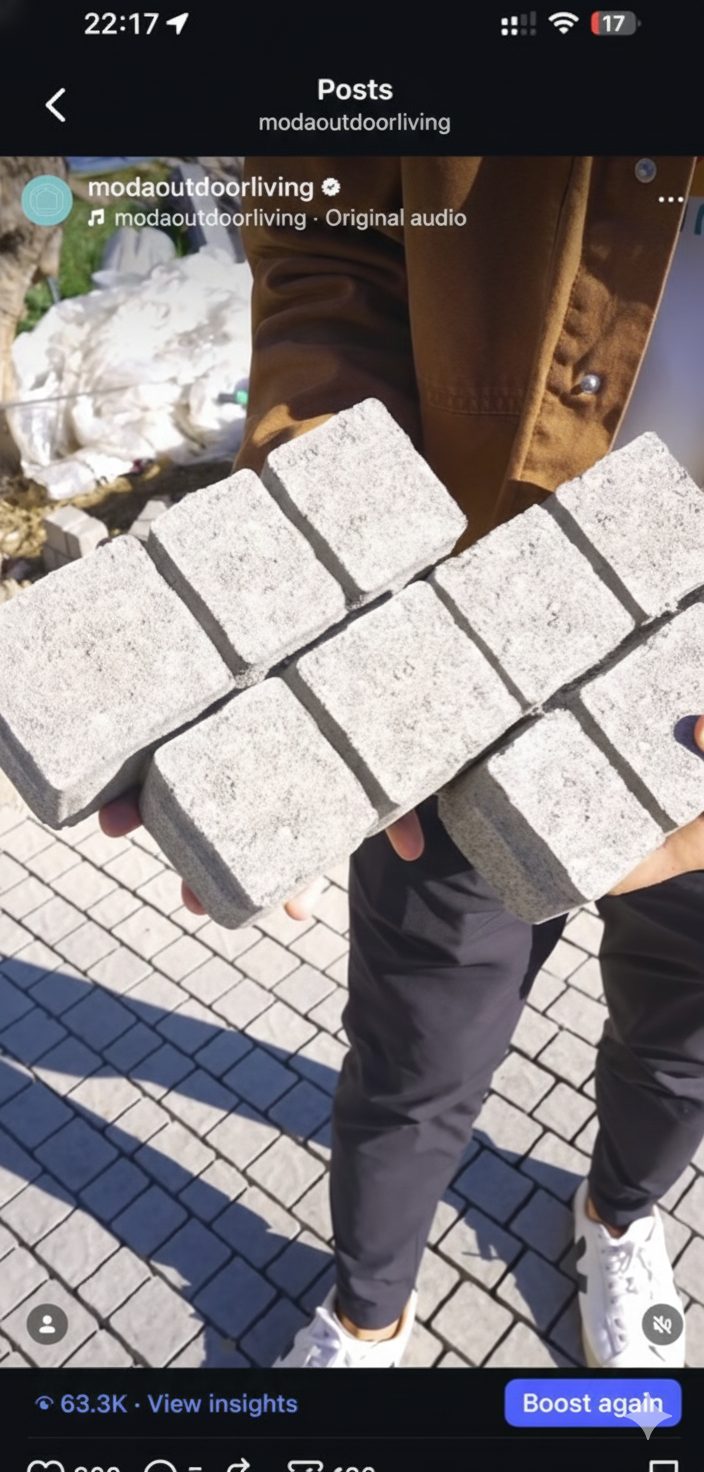
Porcelain pavers are engineered from dense clay fired at extremely high temperatures. They're relatively new to the outdoor market but have gained massive popularity in LA's luxury market. The biggest advantage? Near-zero absorption rate, meaning they resist stains, salt, and pool chemicals better than any natural stone.
- Cost: $32-50/sq ft installed in LA (2026 pricing)
- Heat absorption: Moderate—cooler than concrete, slightly warmer than travertine
- Lifespan: 25-40+ years with virtually no maintenance
- Maintenance: No sealing required, ever
- Look: Consistent color and pattern—can mimic wood, stone, or concrete
- Common finishes: Matte, textured, wood-look, stone-look
Head-to-Head Comparison
Around the Pool
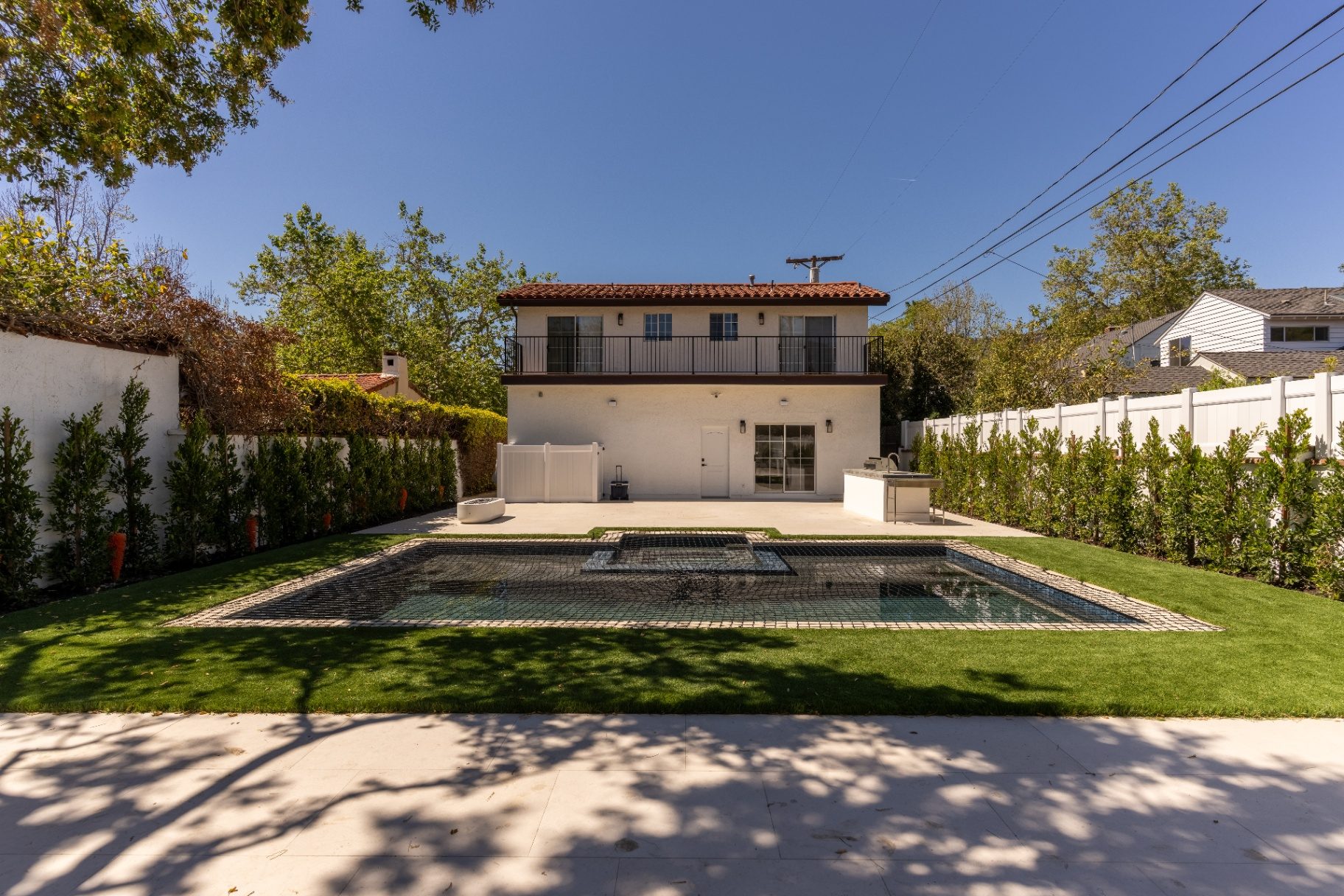
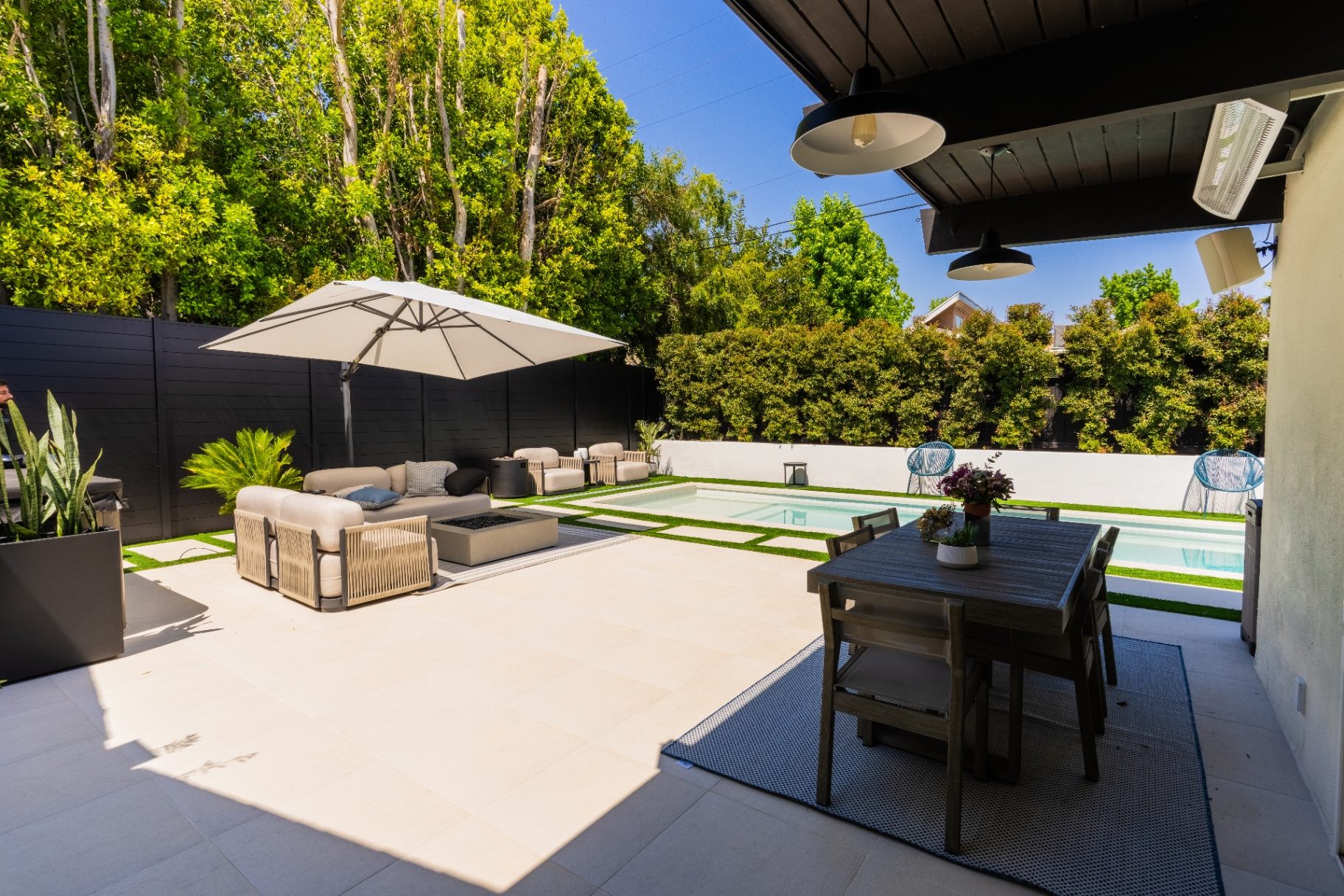
For pool decks specifically, travertine has a slight edge because of its natural cooling properties. Walking barefoot on travertine in 100°F Valley heat is noticeably more comfortable than porcelain. However, porcelain won't stain from pool chemicals, sunscreen, or wine—travertine can if not properly sealed.
Driveways
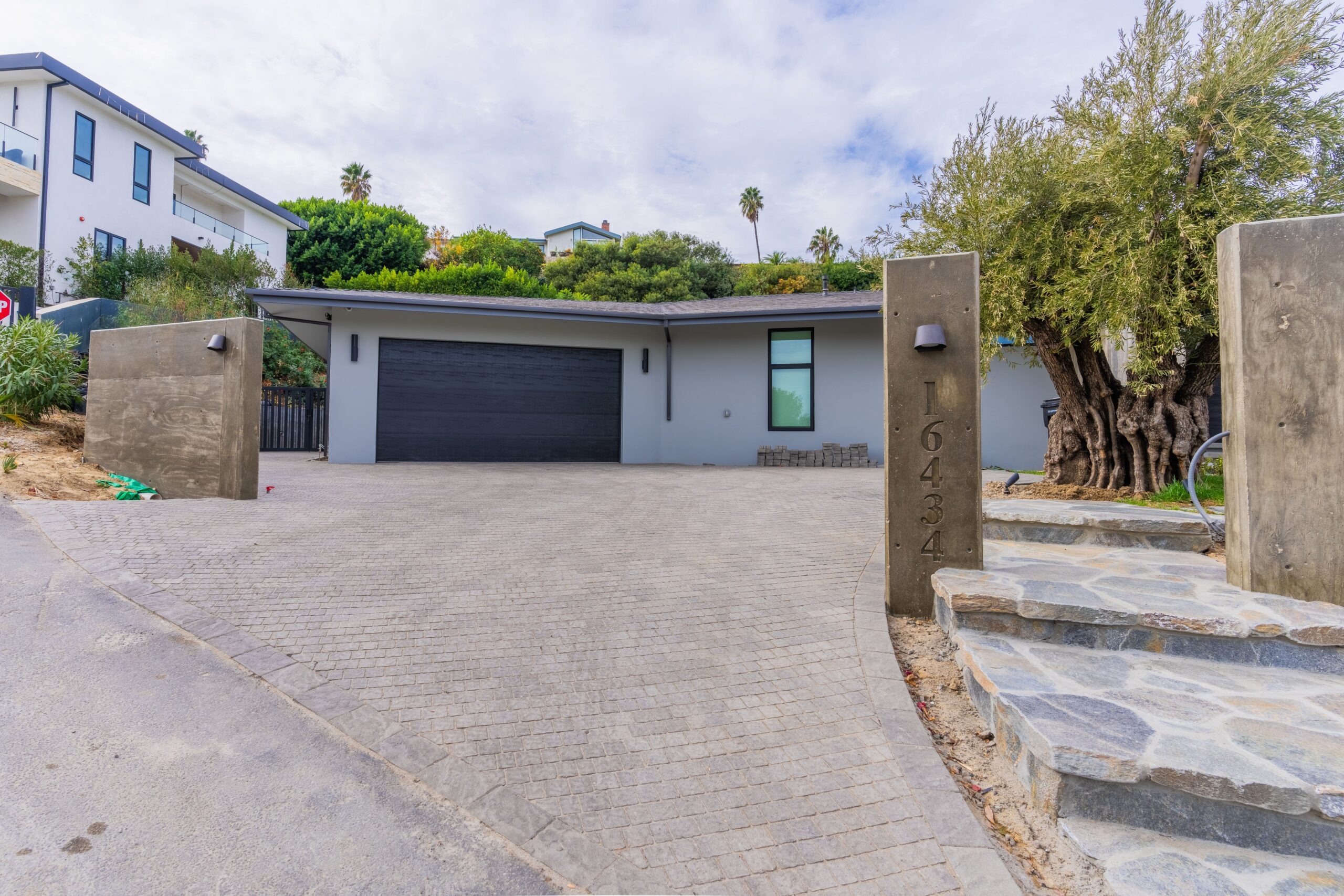
Porcelain wins for driveways. It's harder, more resistant to oil stains, and handles vehicle weight without cracking. Travertine can chip under heavy vehicle traffic and is more susceptible to tire marks.
Outdoor Kitchens & Dining Areas
Porcelain again. Food and grease stains are the enemy of natural stone. Porcelain's near-zero porosity means spills wipe clean without leaving marks. Travertine around cooking areas requires vigilant sealing.
What I Actually Recommend
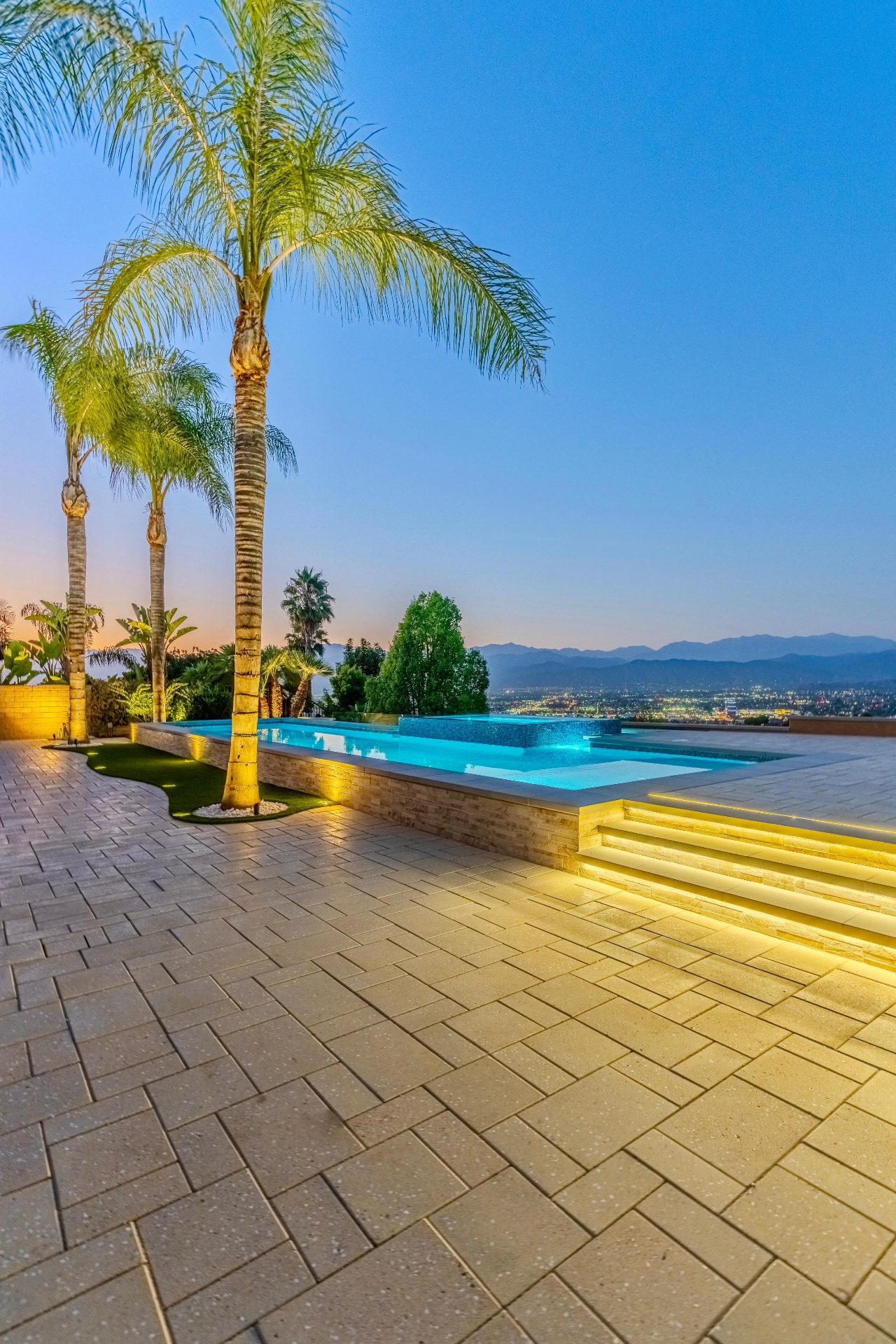
Most of our LA projects use a combination. Here's my go-to approach:
- Pool deck and lounging areas: Travertine (tumbled or brushed for grip + cool feel)
- Outdoor kitchen zones: Porcelain (stain resistance is critical)
- Driveways: Porcelain (durability under vehicle weight)
- Walkways and transitions: Match the adjacent material for visual flow
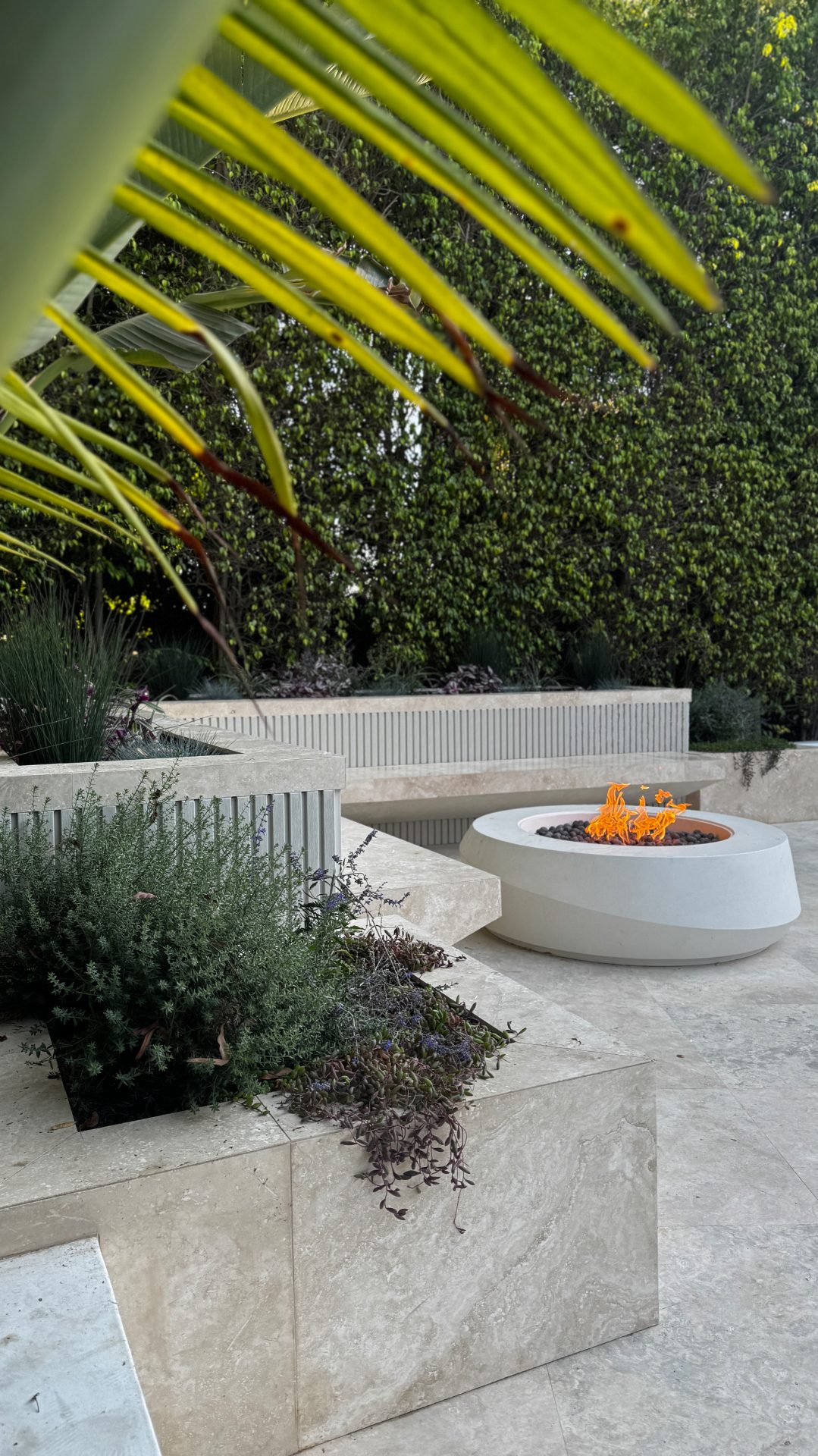
- Fire pit areas: Either works—travertine gives a more organic feel
💡 Pro Tip
Always request large-format samples and lay them in your actual backyard for 24 hours. Walk on them barefoot at 2 PM in summer. That test tells you more than any showroom visit.
Elan recommended travertine around the pool and porcelain for our outdoor kitchen. Two years later, both look brand new. — Michael & Sarah T., Calabasas
Cost Breakdown for a Typical LA Project
For a 1,200 sq ft backyard (pool deck + patio + walkways):
- All travertine: $33,600-54,000 installed
- All porcelain: $38,400-60,000 installed
- Hybrid approach: $35,000-55,000 installed
- Standard concrete pavers (for comparison): $21,600-36,000 installed
The premium over concrete pavers is real—typically 40-60% more. But the longevity, aesthetics, and daily comfort justify the investment for most of our clients.
Frequently Asked Questions
Are travertine pavers slippery when wet?
Tumbled and brushed finishes provide excellent wet traction—comparable to or better than concrete pavers. Avoid polished or honed finishes around pools.
Do porcelain pavers crack in earthquakes?
Porcelain pavers are installed on a sand-set base that allows some flex. They handle seismic activity well—better than poured concrete which can crack.
How often do travertine pavers need sealing in LA?
Every 2-3 years for pool decks (chlorine exposure) and every 3-5 years for patios and walkways. We use penetrating sealers that don't change the natural look.