Concrete Pavers vs Porcelain: Worth the Upgrade?
Five years ago, porcelain pavers were exotic—expensive imports that only showed up on ultra-high-end projects. Today, they've become a mainstream option, especially for pool decks and patios. But are they worth the premium?
Here's my honest breakdown of when porcelain makes sense and when concrete pavers are the smarter choice.
Cost Comparison
Let's start with what you'll actually pay in Los Angeles:
Concrete Pavers (Installed)
- Standard thickness (60mm): $18-25 per square foot
- Premium finishes (textured, tumbled): $22-30 per square foot
- Large format slabs: $25-35 per square foot
Porcelain Pavers (Installed)
- Standard 2cm (¾"): $32-40 per square foot
- Premium 2cm with rectified edges: $38-45 per square foot
- 3cm (1¼") thick: $42-55 per square foot
For a 600 sq ft pool deck, that's roughly $15,000-18,000 for concrete vs $22,000-27,000 for porcelain. Significant, but not as dramatic as it once was.
The Real Advantages of Porcelain
Heat Resistance
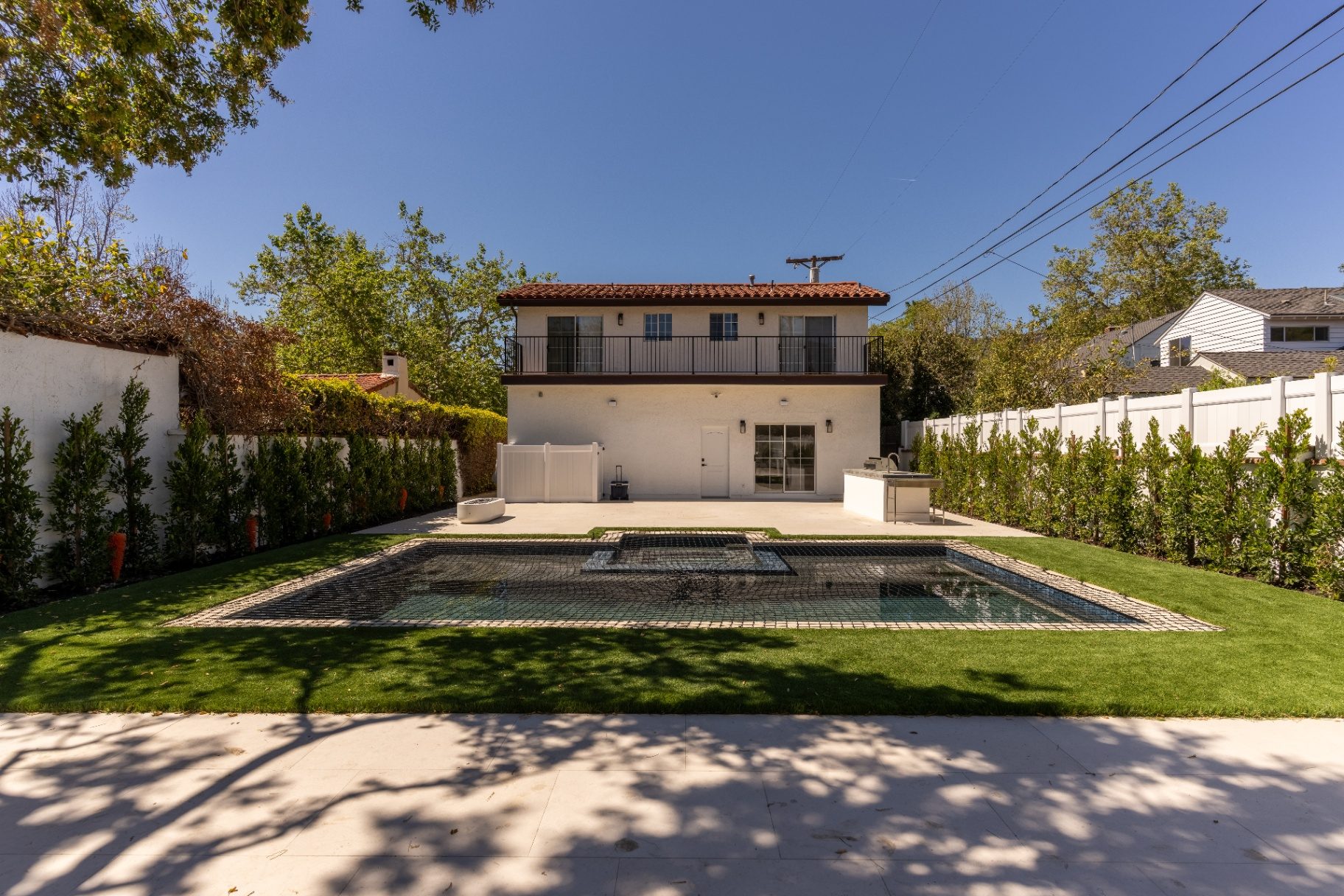
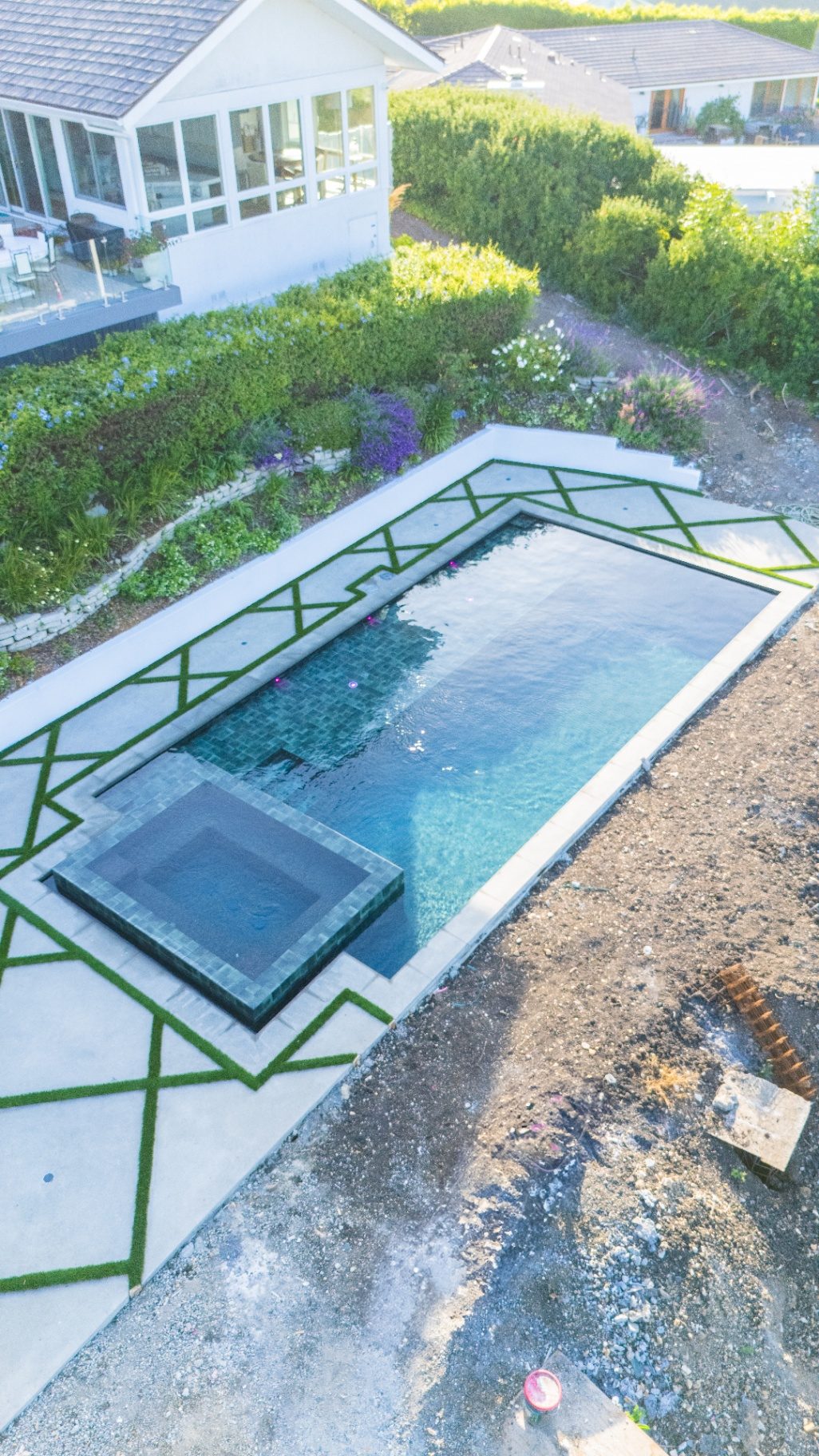
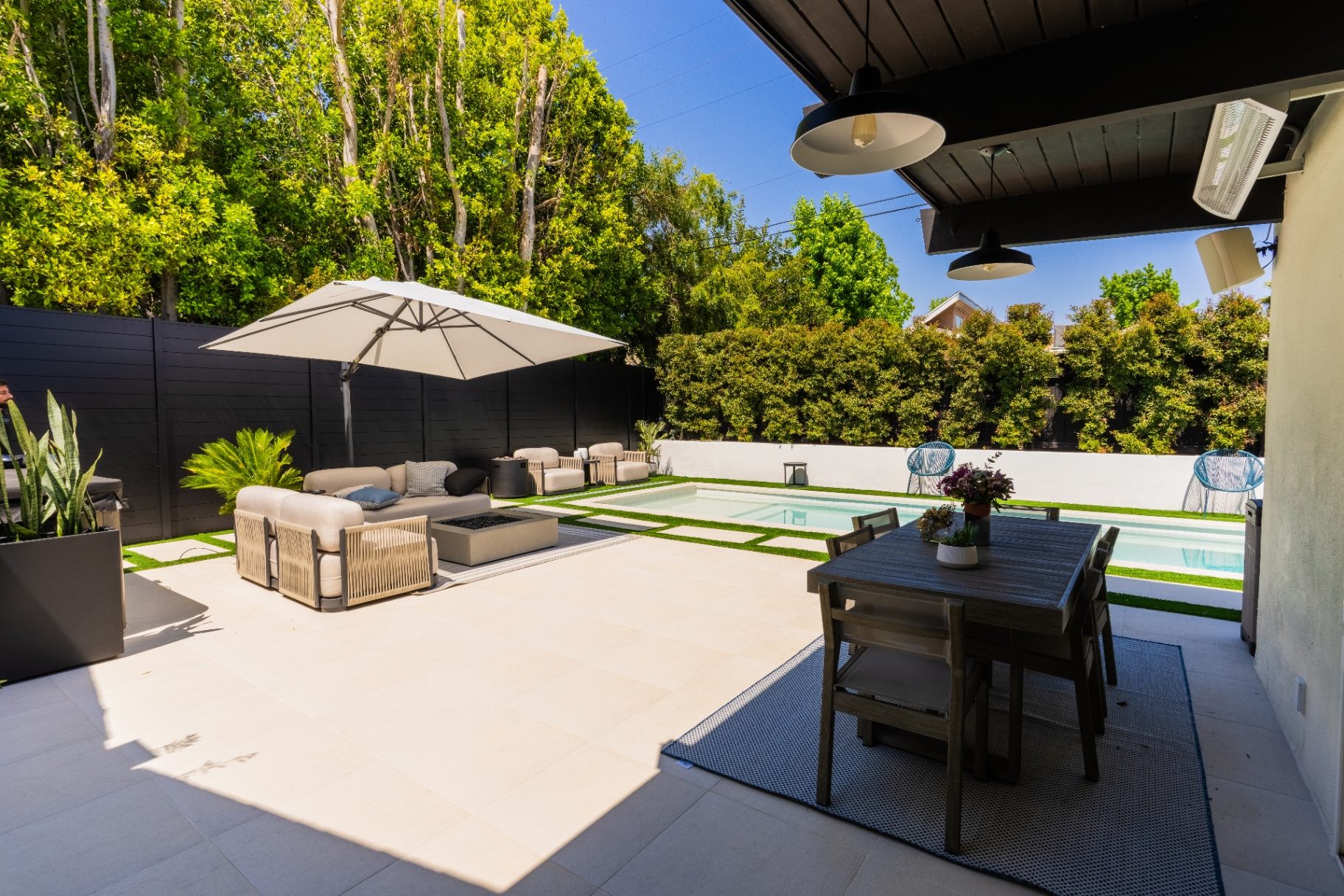
This is the biggest reason porcelain has taken over pool decks. Porcelain reflects more heat and stays cooler underfoot—sometimes 20-30°F cooler than concrete on a hot LA afternoon. For families with kids running around the pool, this matters.
Stain Resistance
Porcelain is essentially impervious. Spilled wine, sunscreen, pool chemicals—wipe them up and the surface is unchanged. Concrete pavers are porous and can stain permanently.
Consistency
Porcelain tiles come in precisely matched colors and patterns. Concrete pavers have inherent color variation (which some people like, others don't).
When Concrete Pavers Win
Durability Under Load
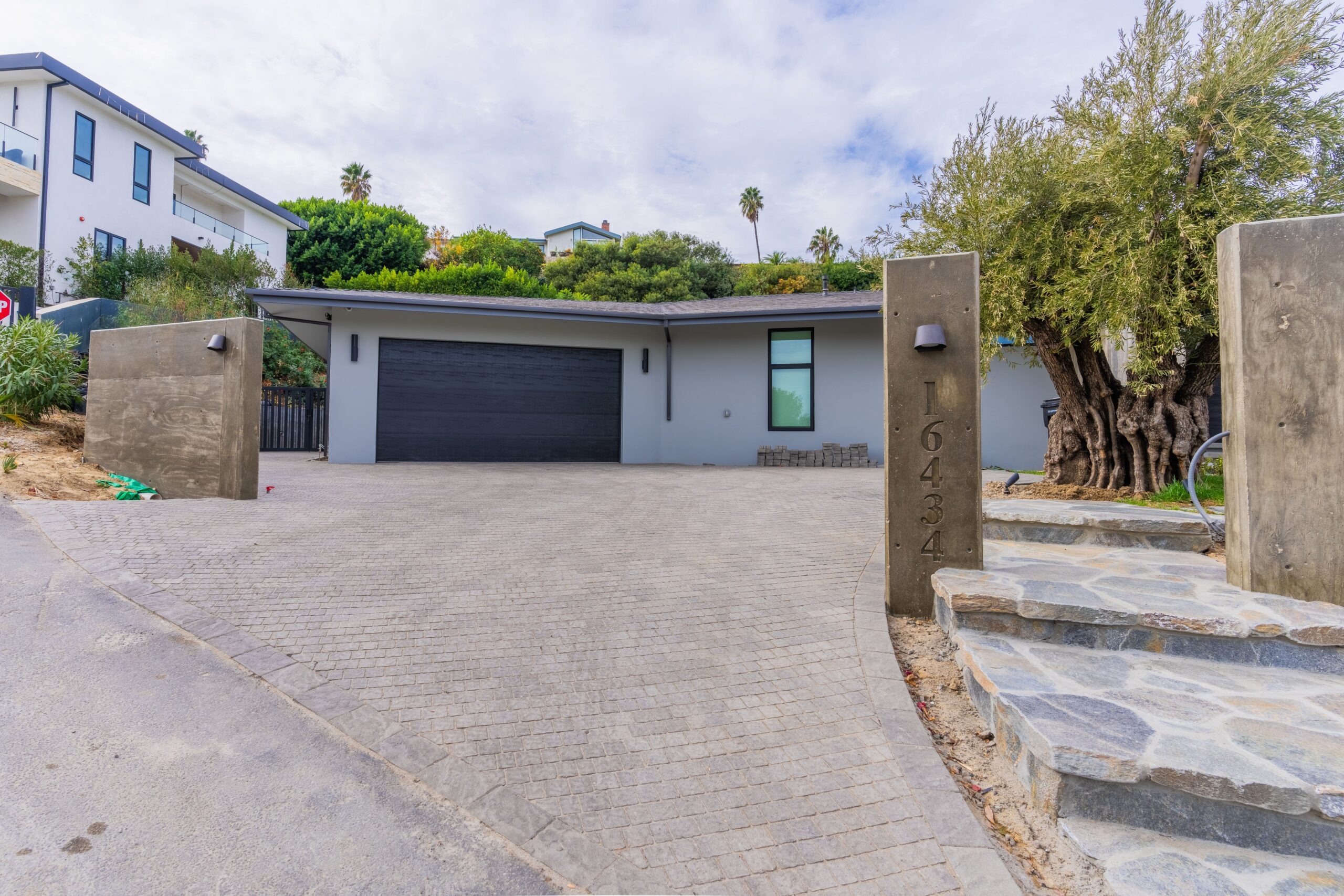
For driveways and areas with heavy furniture or equipment, thick concrete pavers handle loads better. Porcelain can crack under point loads.
Traditional Aesthetics
If you want that classic paver look—tumbled edges, varied colors, old-world texture—concrete is the way to go. Porcelain looks sleek and modern.
Budget
When budget is tight, quality concrete pavers deliver excellent results at lower cost.
The Bottom Line
For pool decks and patios where heat and stains are concerns, porcelain is often worth the upgrade. For driveways, walkways, and areas where traditional aesthetics matter, concrete pavers remain the smart choice.
Frequently Asked Questions
Are porcelain pavers worth the extra cost?
For pool decks, often yes—the heat reduction and stain resistance add real value. For driveways and general hardscape, concrete pavers offer better value.
Do porcelain pavers crack?
They can crack under point loads or if improperly installed. Proper setting on compacted base is essential.
Which is easier to maintain?
Porcelain is nearly maintenance-free. Concrete pavers may need sealing and can stain more easily.
Can I use porcelain pavers for my driveway?
Not recommended. The thickest porcelain pavers (3cm) may still crack under vehicle weight. Concrete pavers are better for driveways.