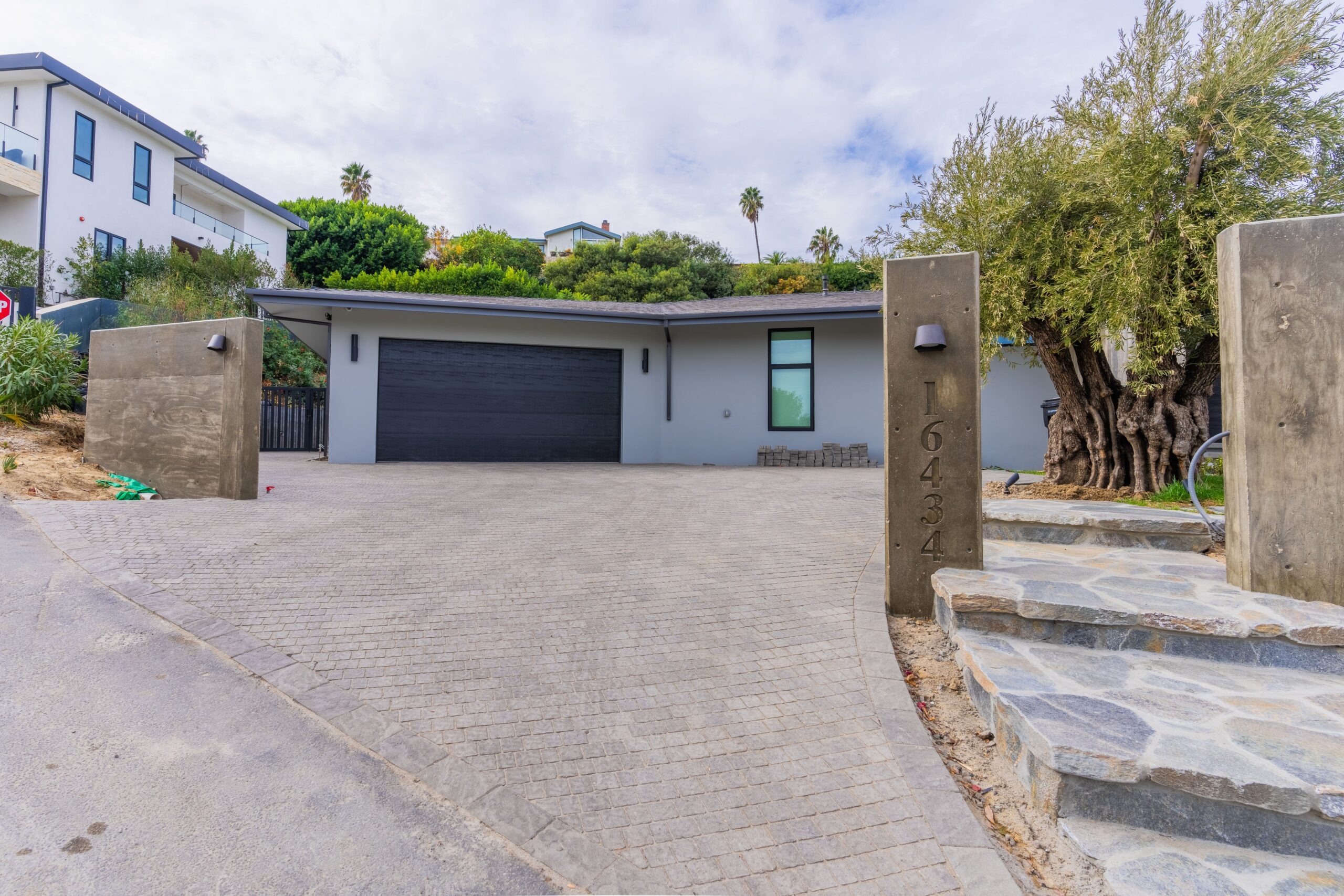
The Great Debate: Pavers vs Poured Concrete
This is the question I get asked more than almost any other: should I do pavers or concrete? After installing thousands of driveways and patios across Los Angeles, I can tell you there's no universal answer—but there is a right answer for your specific situation.
Let me walk you through the real-world differences, including costs, durability, maintenance, and what actually matters in Southern California's climate.
Cost Comparison: What You'll Actually Pay in LA
Here's what these materials really cost installed in Los Angeles in 2026:
Poured Concrete
- Basic gray concrete: $8-12 per square foot installed
- Stamped concrete: $12-18 per square foot installed
- Colored/stained concrete: $10-15 per square foot installed
- Exposed aggregate: $12-16 per square foot installed
Pavers
- Standard concrete pavers: $18-25 per square foot installed
- Premium concrete pavers (Belgard, Angelus): $22-32 per square foot installed
- Porcelain pavers: $32-45 per square foot installed
- Natural stone pavers: $35-60+ per square foot installed
For a typical 500 sq ft driveway, you're looking at $4,000-9,000 for concrete vs $9,000-22,000 for pavers. That's a significant difference—but it's not the whole story.
Durability: What Holds Up in LA
Southern California's climate creates specific challenges:
Concrete's Achilles Heel
Poured concrete is essentially one giant slab. This becomes a problem because:
- Soil movement causes cracks that spread across the entire surface
- Tree roots push up sections, creating trip hazards
- LA's clay soils expand and contract with moisture, stressing the slab
- Once cracked, repairs are obvious patches that never quite match
Why Pavers Handle Movement Better
Pavers are individual units set on a sand base. When the ground moves:
- The flexible system absorbs movement without cracking
- Individual pavers can be lifted, leveled, and reset
- Tree root damage affects only a few pavers, not the whole surface
- Repairs are invisible—you just replace the affected pavers
💡 Pro Tip
In hillside properties or areas with expansive clay soil (common in the Valley and Westside), pavers almost always perform better long-term than poured concrete.
Heat Considerations in Southern California
LA sun is brutal on hardscape. Here's what you need to know:
- Dark concrete absorbs heat and can reach 150°F+ on summer afternoons
- Light-colored pavers reflect more heat and stay cooler
- Porcelain pavers stay significantly cooler than concrete—crucial around pools
- Stamped concrete patterns can become slippery when wet
For pool decks specifically, I almost always recommend pavers over poured concrete. The heat difference is noticeable, and the slip resistance is better.
Maintenance Reality Check
Concrete Maintenance
- Needs resealing every 2-3 years ($0.50-1/sq ft)
- Cracks require professional patching
- Stains can be permanent if not treated quickly
- Eventually needs replacement when cracking becomes severe (15-25 years)
Paver Maintenance
- Polymeric sand may need refreshing every 3-5 years
- Sealing is optional but recommended every 2-3 years
- Individual pavers can be replaced if stained or damaged
- Properly installed pavers can last 50+ years
When to Choose Concrete
Concrete makes sense when:
- Budget is the primary concern and you need maximum coverage
- You want a very smooth, modern, minimalist look
- The area has stable soil and no nearby trees
- You're doing a small area where the cost difference is minimal
- You want specific stamped patterns that pavers can't replicate
When to Choose Pavers
Pavers are the better choice when:
- Long-term value matters more than upfront cost
- You have trees nearby or unstable soil
- The area is near a pool or will be walked on barefoot
- Future repairs or modifications are likely
- You want more design flexibility and material options
- You're on a hillside or have known drainage challenges
We went with pavers even though they cost more upfront. Three years later, our neighbor's concrete driveway is cracked and ours still looks new. — David L., Studio City
The Bottom Line
For most Los Angeles homeowners, pavers are the smarter long-term investment for driveways and patios. Yes, they cost more upfront—but they last longer, look better over time, and are far easier to repair when issues arise.
The exception is ultra-modern homes where a clean concrete look is essential to the architecture. In those cases, we use high-quality concrete with proper jointing and reinforcement to minimize cracking.
Watch the Transformation
Frequently Asked Questions
Are pavers more expensive than concrete?
Yes. Pavers cost $18-45/sq ft installed vs $8-18/sq ft for concrete. However, pavers typically last 2-3x longer and are much easier to repair.
Which is better for a driveway in Los Angeles?
Pavers generally perform better due to LA's clay soils and tree roots. They absorb ground movement without cracking and can be easily repaired.
Do pavers get hot in summer?
All hardscape gets hot in LA summers. Light-colored pavers and porcelain pavers stay cooler than dark concrete. For pool decks, pavers are significantly more comfortable.
How long do pavers last vs concrete?
Properly installed pavers can last 50+ years. Poured concrete typically shows significant cracking within 15-25 years in LA.