Creating Cohesive Outdoor Spaces
The backyards that feel truly special don't just have great features—they have features that work together. The pool relates to the fire pit. The pergola frames the view. Materials flow from one area to another. Here's how we approach integrated design.
Start With Sightlines
Before choosing features, understand what you'll see:
- From inside the house looking out
- From the main seating area
- From the pool
- From neighbors' properties (what they see matters too)
Features should create focal points along these sightlines, not block them or fight for attention.
Material Palette
Limit yourself to 3-4 complementary materials:
- One dominant hardscape (pavers, concrete, stone)
- One accent material (different stone, tile, wood)
- One metal finish (for furniture, fixtures, pergola)
- One water finish (pool interior)
Everything else—coping, countertops, fire pit surround—should come from this palette.
Feature Relationships
Pool and Fire Pit
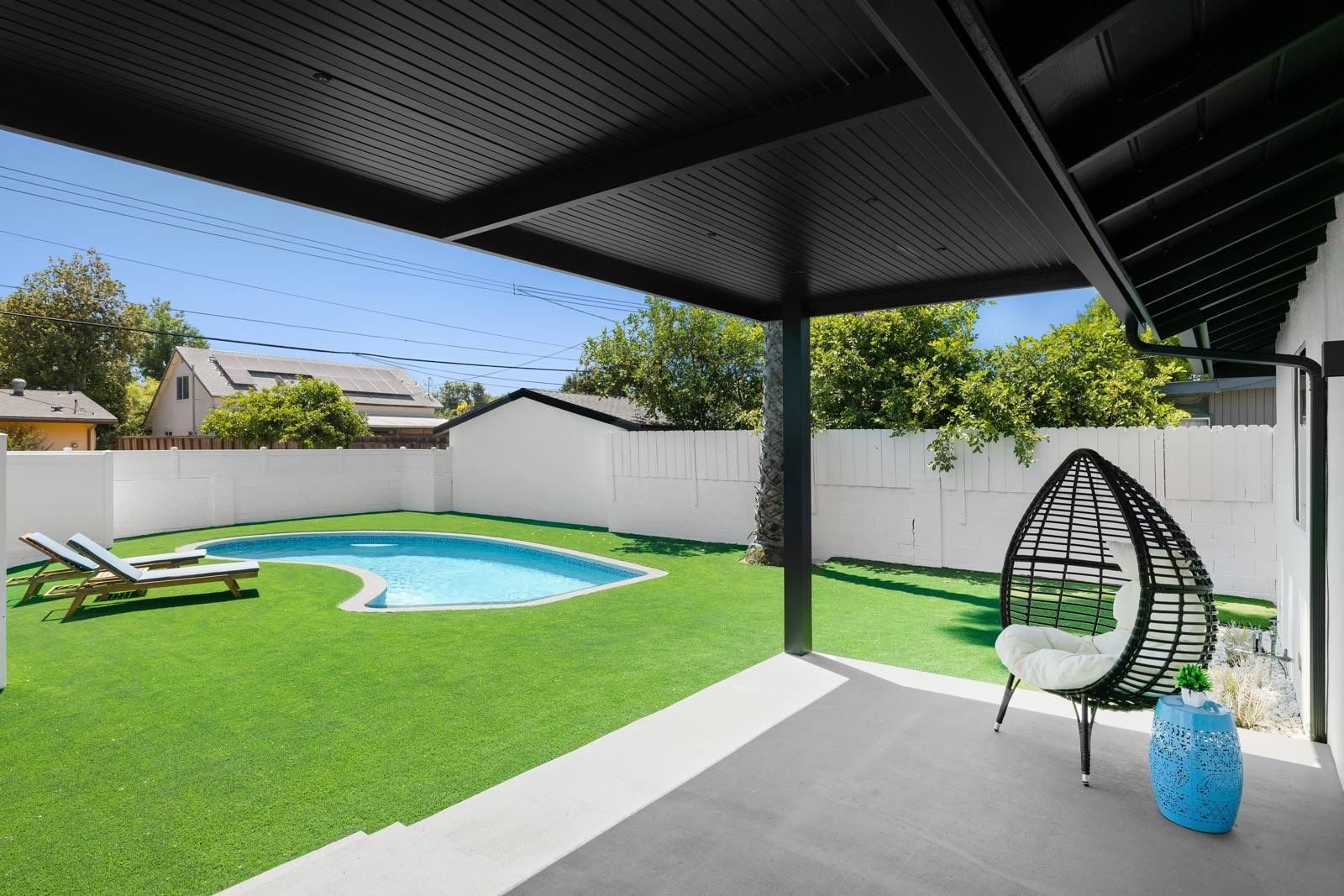
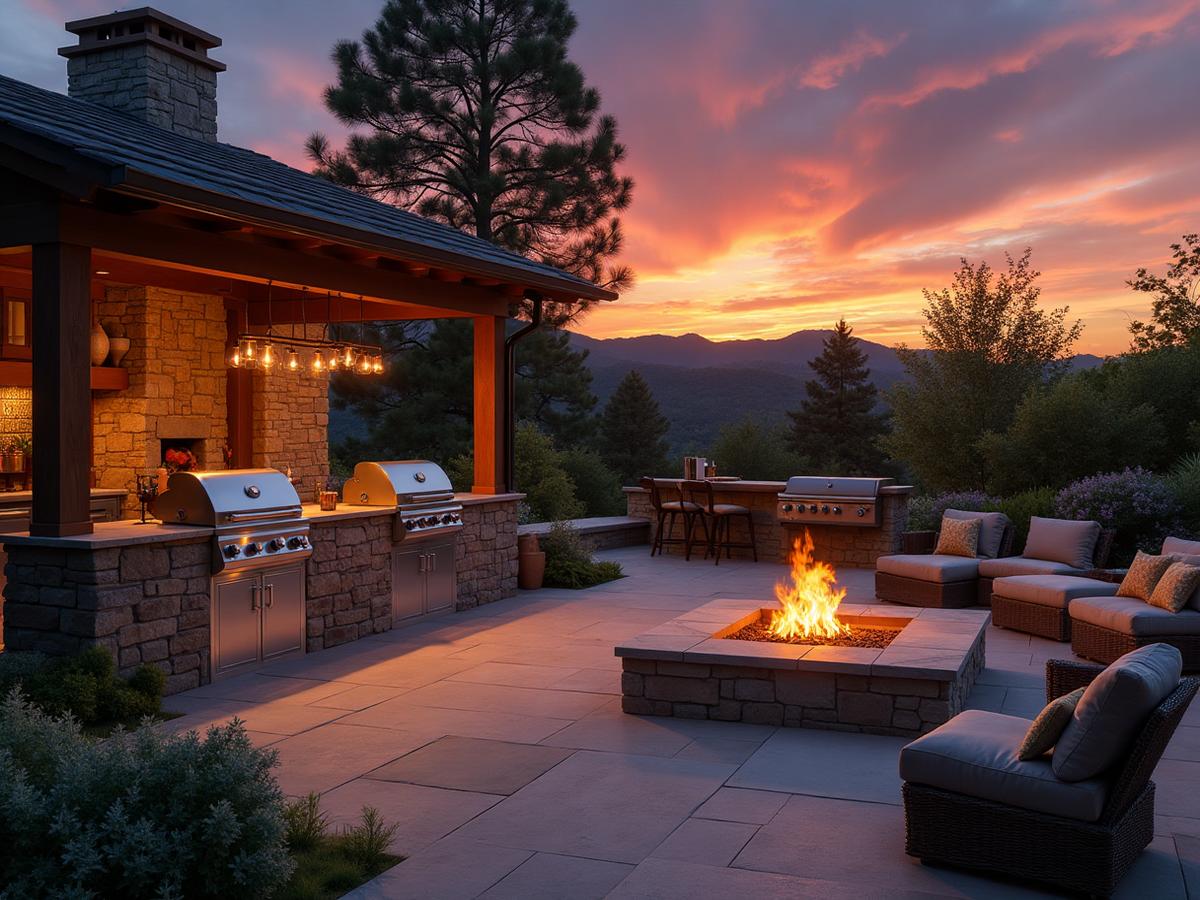
Place fire features where they're visible from inside the pool. The contrast of fire and water is dramatic—maximize it.
Pergola and Kitchen
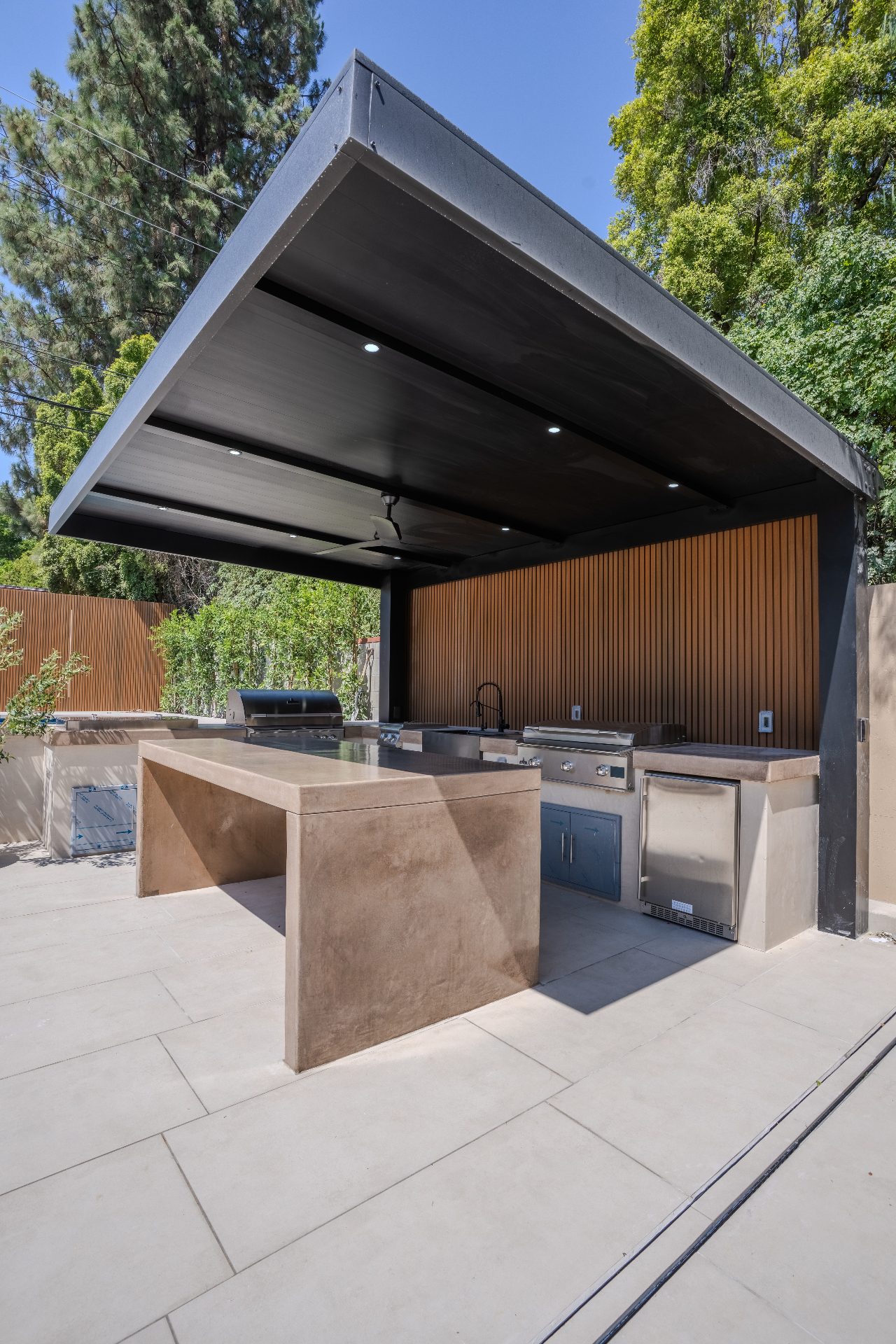
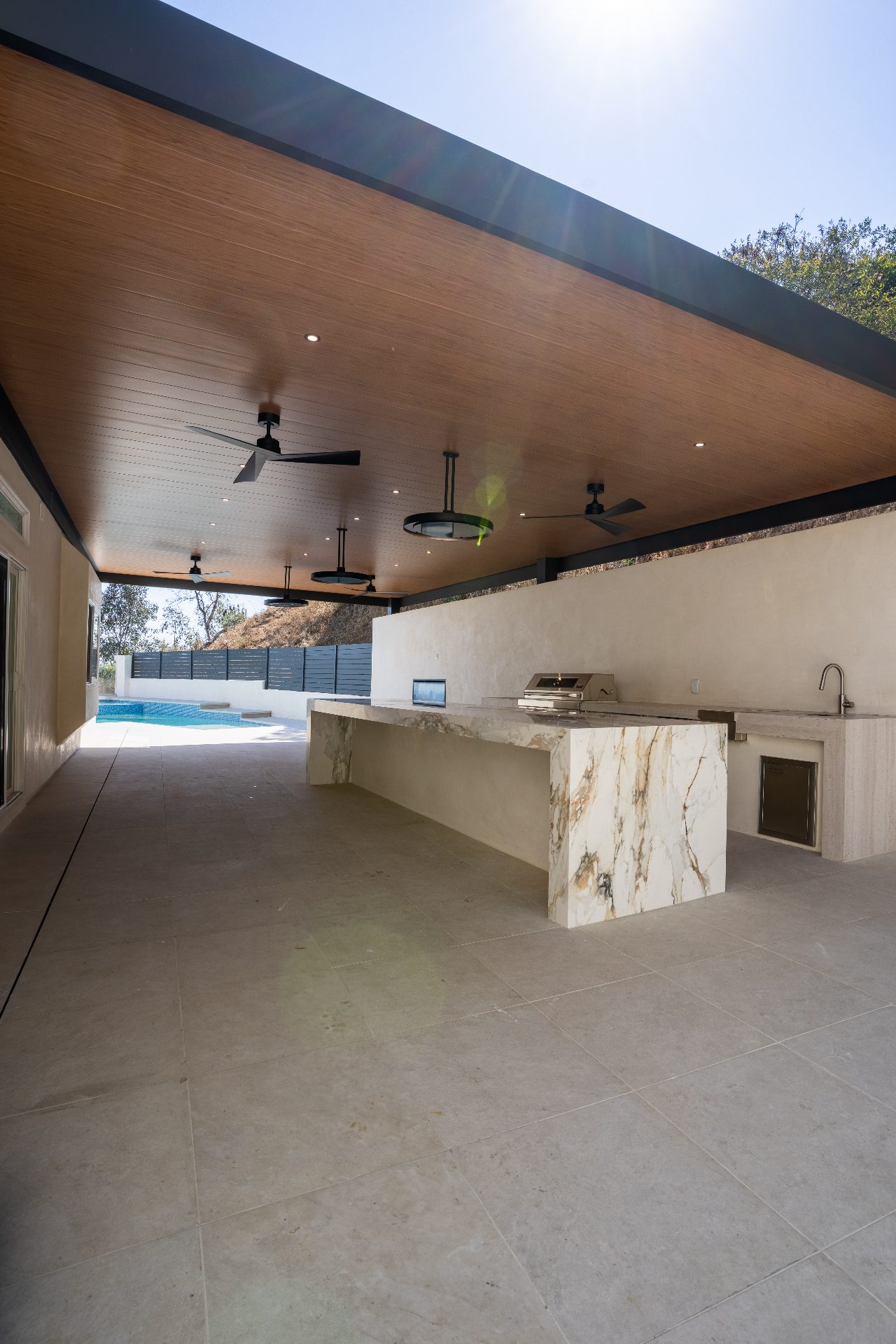
If you're cooking outside, shade matters. The pergola should cover the kitchen area while allowing views to the pool and fire.
Seating and Views
Position seating to see multiple features. You shouldn't have to choose between looking at the pool or the fire.
Lighting Unifies Everything
Consistent lighting temperature (2700K warm) and style ties disparate elements together. Plan lighting as part of design, not an afterthought.
💡 Pro Tip
If you're not sure features will work together, create a mood board with actual material samples and photos of each element. Trust your eye—if it looks wrong at small scale, it'll look wrong at full scale.
Frequently Asked Questions
How do I make sure my backyard features work together?
Start with sightlines and a limited material palette. Position features to create visual relationships—fire visible from pool, pergola framing views.
Should all my outdoor materials match?
Not necessarily. Complementary is often better than matching. A consistent palette of 3-4 materials creates cohesion without monotony.
What's the biggest mistake in backyard design?
Adding features as afterthoughts. Each addition looks nice alone but fights with others. Design everything together, even if you build in phases.