What Coping Does Beyond Looking Good
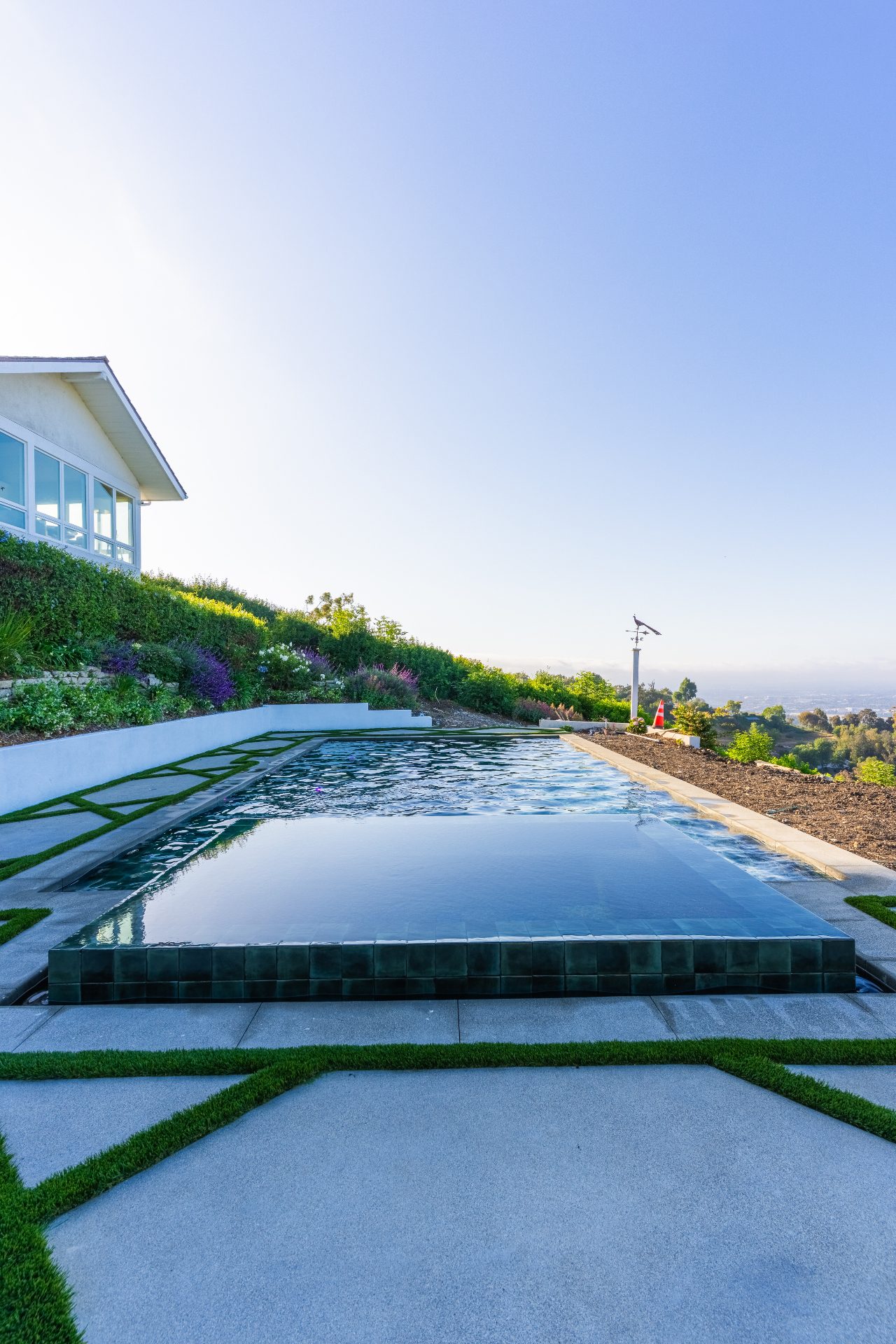
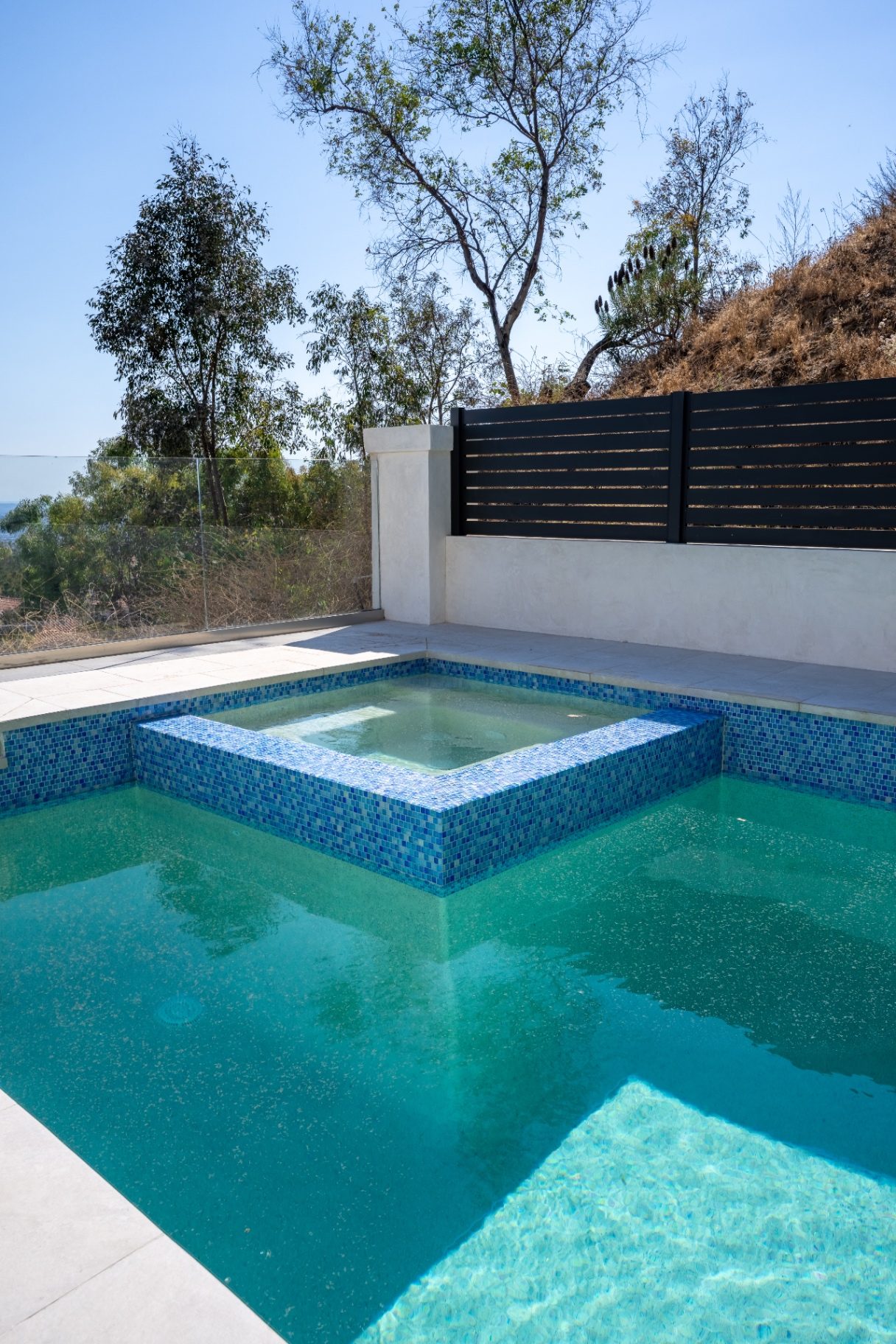
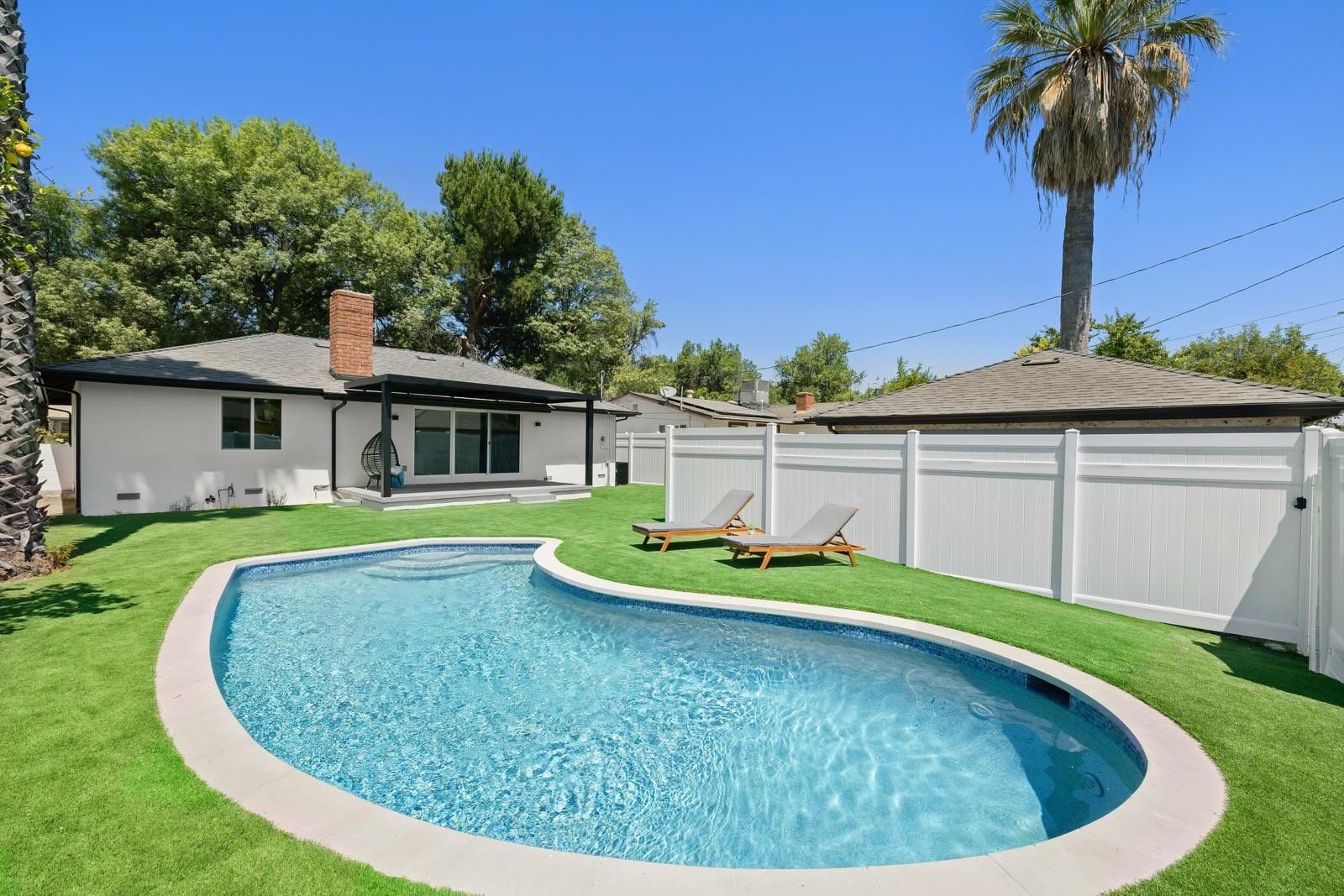
Coping is the cap that runs around the entire pool edge — it protects the bond beam, sheds water away from the shell, and gives you a place to grip getting in and out. The material you choose determines heat retention underfoot, slip resistance, and how the whole pool deck reads visually.
Travertine Coping
Travertine is the most common upgrade coping in Southern California pools — natural stone with a honed or tumbled finish that stays relatively cool underfoot even in direct sun, which matters a lot for bare feet in August. It has a warm, natural look that pairs well with most hardscape and plaster colors.
Porcelain Coping
Porcelain coping is a newer option gaining ground for its consistency — every piece is manufactured to the same color and texture, so there's no variation from batch to batch the way natural stone can have. It's extremely low-maintenance, doesn't stain or etch from pool chemicals, and holds up well long-term, typically at a price point at or above travertine depending on the profile chosen.
Concrete Coping
Poured or precast concrete coping is the most budget-friendly option. It can be finished, stamped, or colored to approximate the look of stone at a lower cost, but it doesn't have the same depth of color or texture as natural stone or porcelain, and it can crack over time with ground movement.
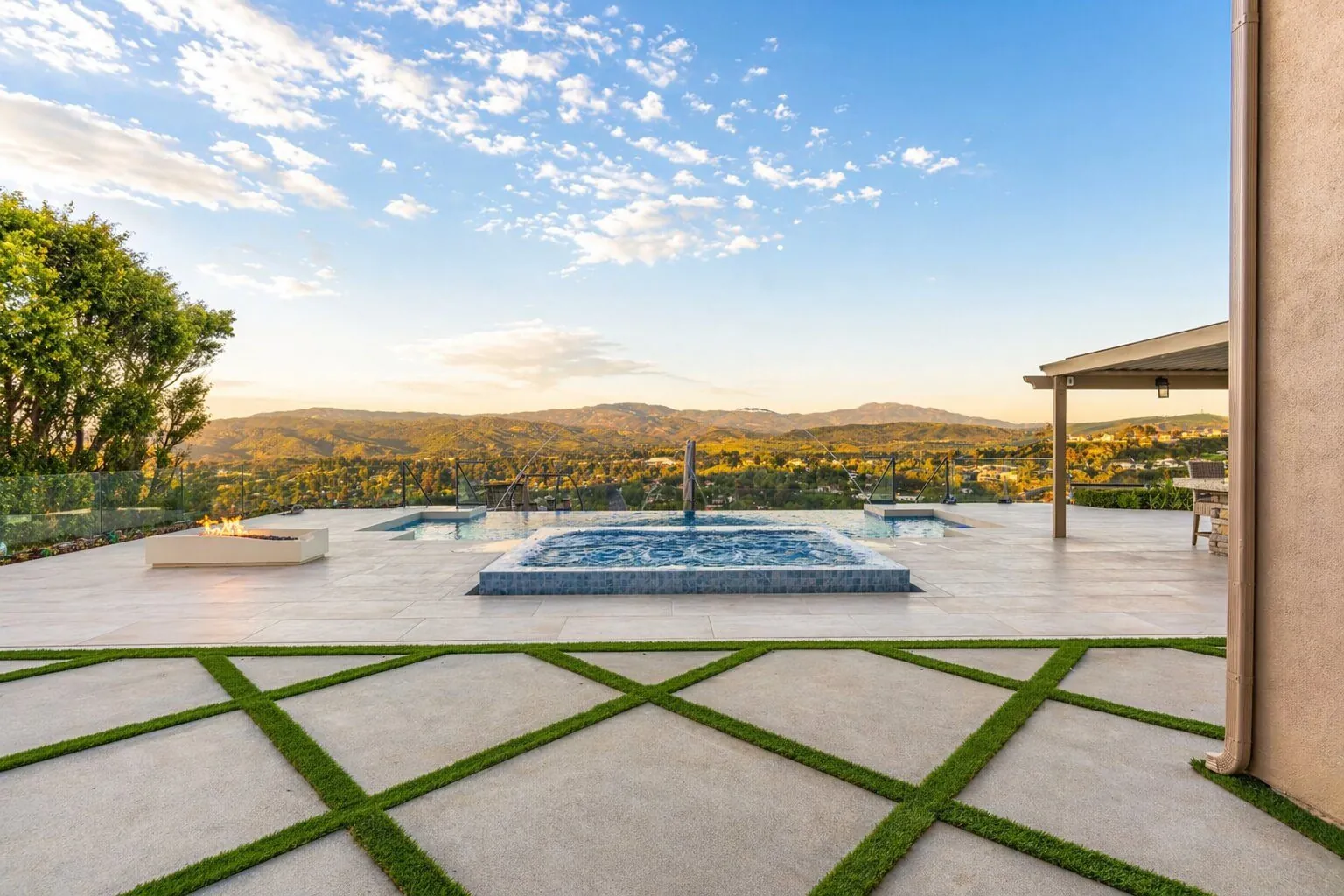
Comparing the Three
- Travertine — natural stone, stays cool, warm aesthetic, mid-to-upper cost
- Porcelain — manufactured consistency, chemical and stain resistant, low maintenance, upper cost
- Concrete — most affordable, versatile finishes, more prone to cracking over decades
💡 Pro Tip
Match your coping profile to how the deck will be used — a bullnose edge is comfortable for sitting and swinging legs in, while a square-cut edge gives a more modern, architectural line.
Pairing Coping with Waterline Tile
Porcelain coping paired with porcelain mitered-edge waterline tile ($45/LF) gives the most seamless, monochromatic result. Travertine coping pairs naturally with standard waterline tile ($30/LF) for a more traditional Southern California look. Either combination can be run through our estimate tool alongside your pool size for a full remodel number.
Because coping replacement typically happens during a full remodel — chip-out, replaster, new tile — it's worth deciding on coping material at the same time you're choosing interior finish and waterline tile, since all three get installed in the same sequence.
Frequently Asked Questions
What is the best coping material for a pool in Southern California?
Travertine is the most popular choice because it stays cool underfoot in direct sun, but porcelain is gaining ground for its consistency and chemical resistance, and concrete remains the most budget-friendly option.
Does pool coping get hot in the sun?
Natural stone like travertine stays noticeably cooler underfoot than concrete or dark-colored porcelain in direct summer sun, which is a major reason it's favored around Southern California pools.
Can I replace coping without replastering the pool?
Yes, but since coping work requires draining the pool and often affects the tile line, most homeowners combine it with a replaster and retile job rather than doing it as a completely separate project.
How much does pool coping cost as part of a remodel?
Coping is typically bundled into remodel pricing tiers — a replaster plus waterline tile and coping refresh runs $14,999–$28,000 depending on pool size and material choice.
Does concrete coping crack over time?
It can, especially with soil movement or freeze-thaw cycles, more so than natural stone or porcelain, though quality installation and control joints reduce the risk significantly.