Why Linear Fire Is Everywhere Right Now
If you've scrolled through any backyard design feed recently, you've seen them—long, narrow fire troughs that run along pool edges, seating walls, or as standalone features. They're clean, contemporary, and they completely change the geometry of a space.
I've installed more linear fire features in the last 18 months than in the previous five years combined. The demand is real, and it's being driven by homeowners who want modern design without sacrificing warmth and ambiance.
What Makes Linear Fire Different
Traditional fire pits are round or square—they create a central gathering point. Linear fire stretches the flame out, creating a wall of warmth along one side. Think of it as the difference between a campfire and a fireplace. Both are beautiful; they just serve different spatial purposes.
- Length: Typically 3-8 feet, some custom builds go 12+ feet
- Width: Usually 6-14 inches
- Fuel: Natural gas (almost exclusively in LA)
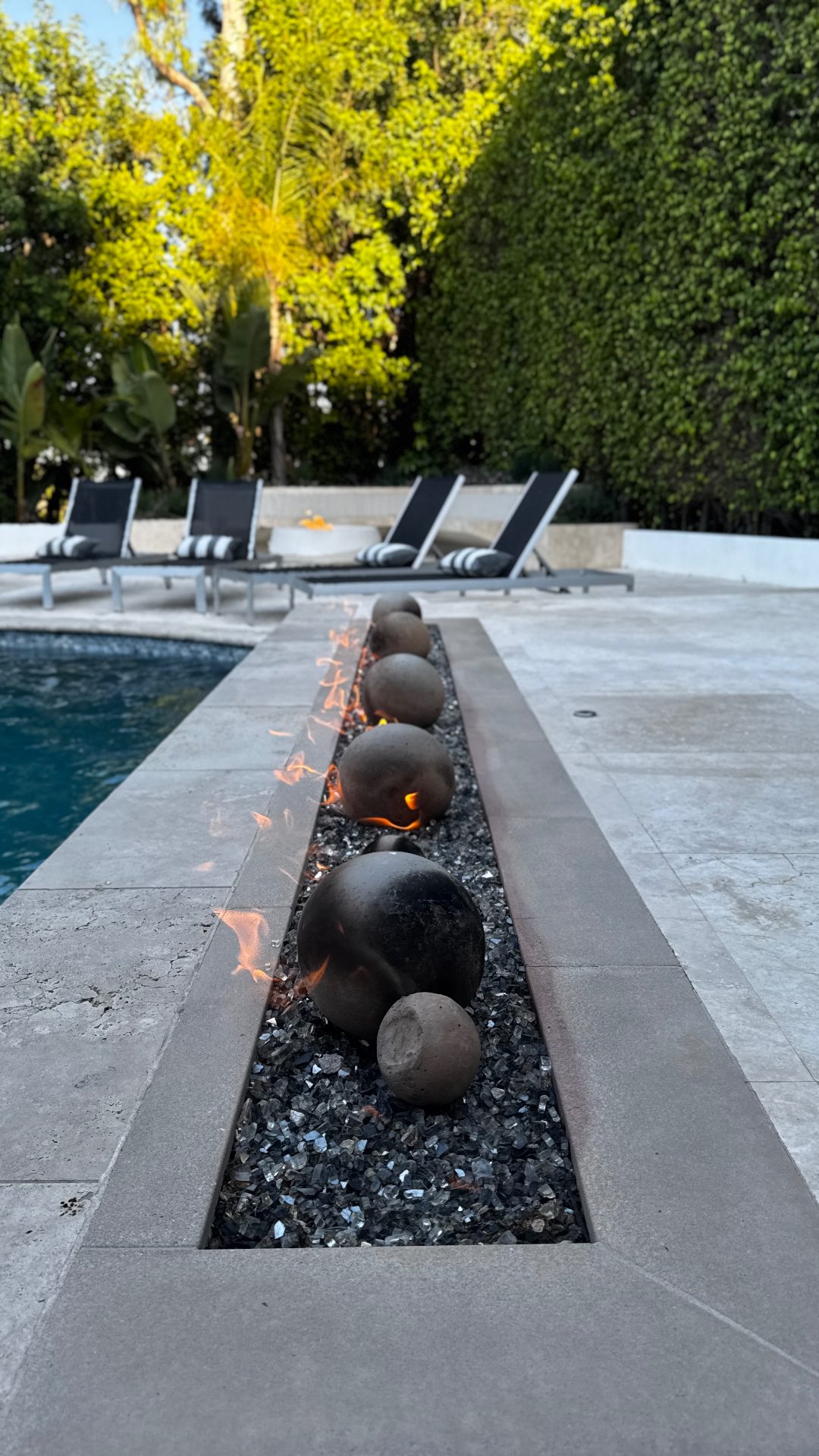
- Media: Fire glass, lava rock, or fire balls
- BTU: 40,000-120,000 depending on length
Where to Place Linear Fire
Pool Edge Integration
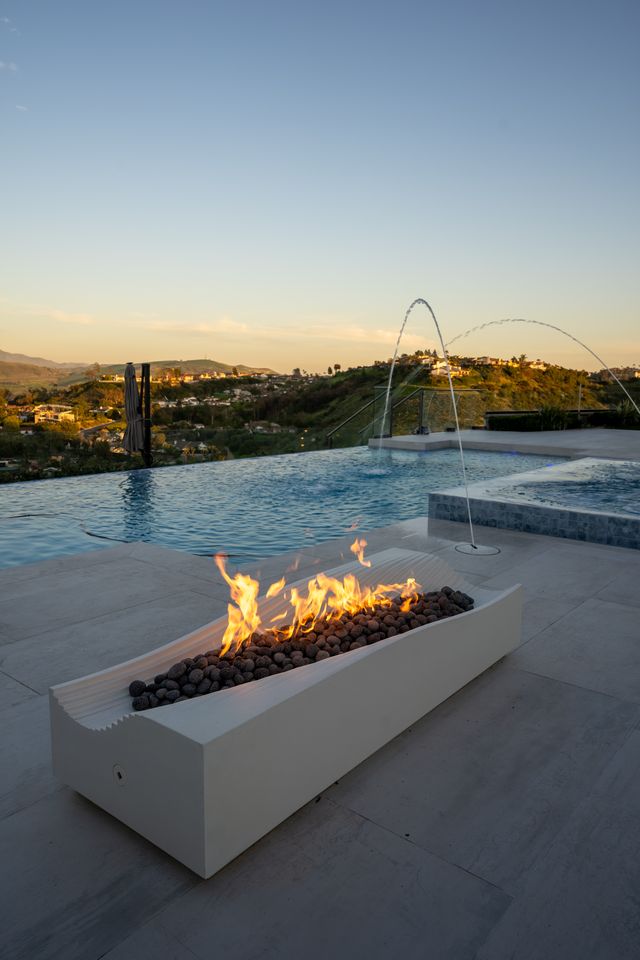
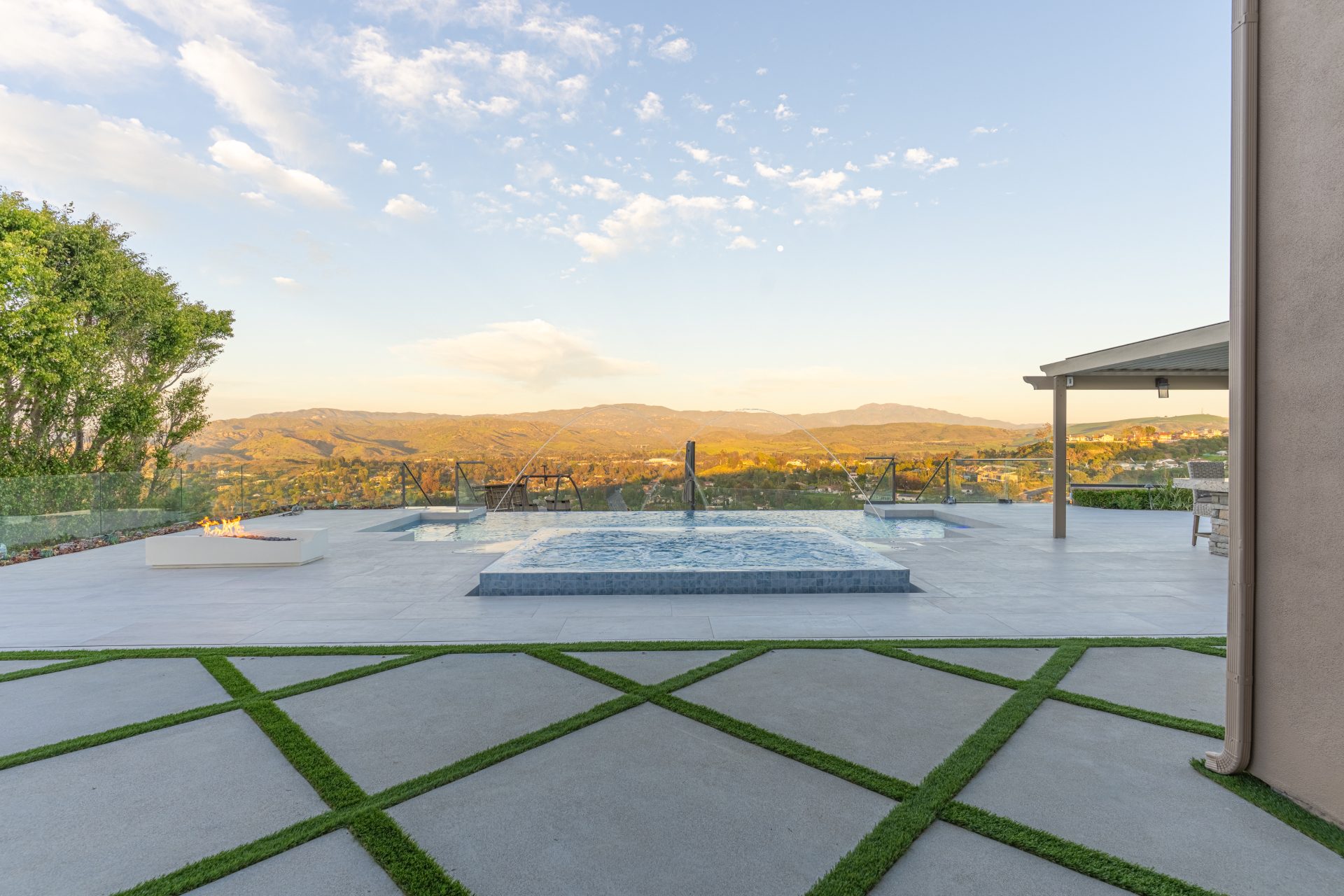
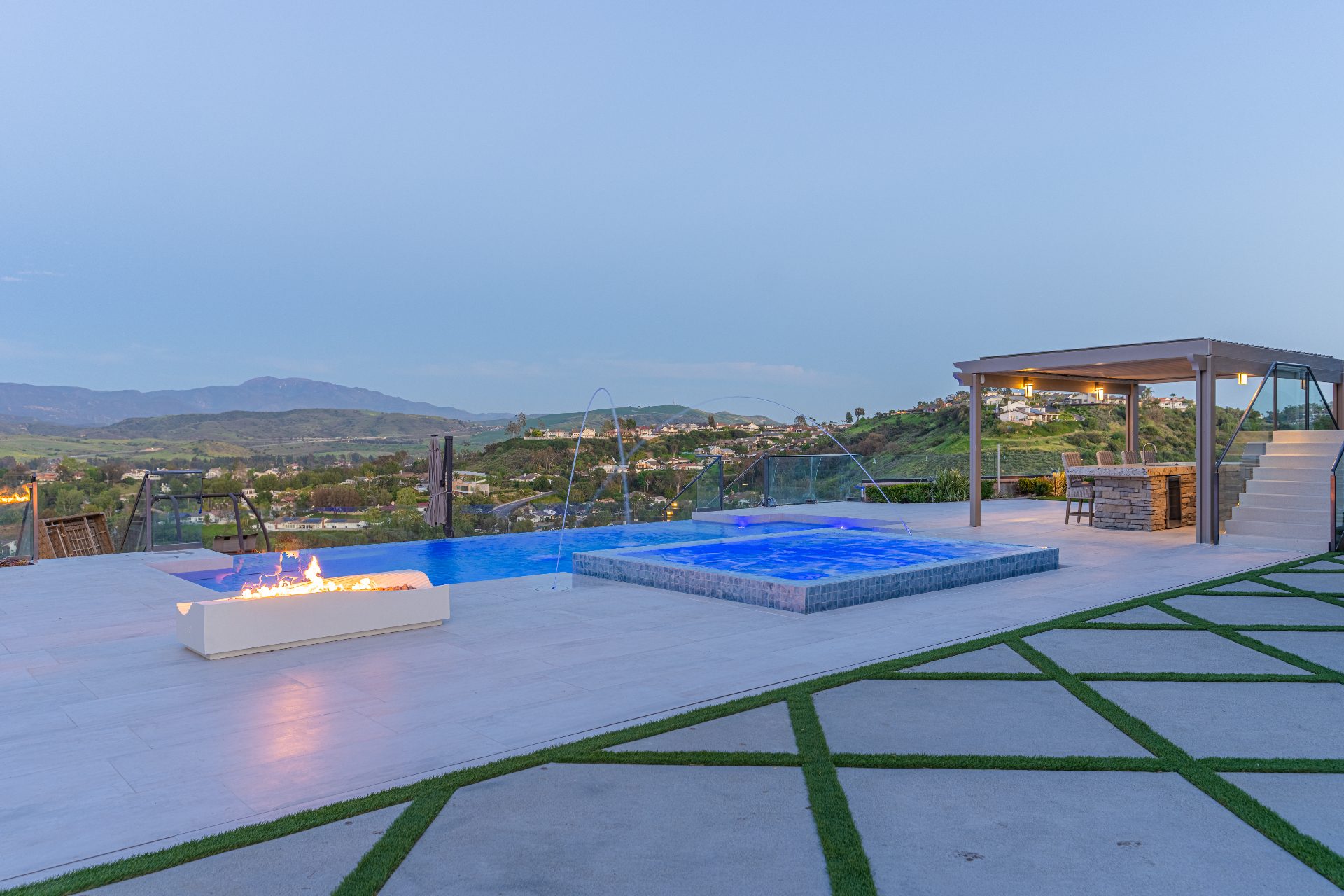
The most dramatic placement. A linear fire trough runs along the raised pool wall, with flames reflecting off the water surface. We've done this on dozens of hillside pools in Calabasas and Encino, and it never gets old.
Seating Wall Top
Build a low seating wall (18-22 inches) with a fire trough running along the top. Guests sit on one side, warmth radiates from the other. Perfect for entertaining zones.
Dining Table Integration
Custom dining tables with built-in linear fire are the ultimate luxury. They require careful engineering for heat management and gas supply, but the result is a dining experience you can't get anywhere else.
Pathway Accent
Narrow linear features (3-4 feet) work beautifully alongside walkways, creating a guided-light effect that leads guests through the yard.
Cost Breakdown
- 3-foot linear burner kit: $800-$1,500
- 6-foot linear burner kit: $1,500-$3,000
- 8-foot linear burner kit: $2,500-$4,500
- Custom enclosure/trough construction: $3,000-$8,000
- Gas line and connections: $1,500-$3,000
- Fire glass media: $300-$800
- Total installed (6-foot): $8,000-$15,000
- Total installed (8-foot premium): $12,000-$22,000
💡 Pro Tip
For the best flame presentation, use a trough at least 6 inches deep. Shallow troughs let wind scatter the flame. And always specify a wind guard option for canyon or hilltop properties.
Maintenance and Safety
Linear fire features are remarkably low-maintenance. Clean the fire glass once or twice a year. Check the ignition system annually. The gas burner itself should last 10-15 years. The biggest maintenance item is keeping debris out of the trough—a simple mesh cover when not in use solves this.
Clearance requirements: LADBS requires minimum 3 feet from combustible materials (pergolas, overhangs). Plan this in your design phase—retrofitting clearances is expensive.
The linear fire along our pool wall is the feature everyone photographs. It completely elevated the design. — Mark & Jennifer L.
Frequently Asked Questions
How long can a linear fire feature be?
Standard kits go up to 8 feet. Custom builds can extend to 12+ feet, but require higher gas supply and multiple burner zones.
Are linear fire features safe near a pool?
Yes, with proper setbacks (minimum 3 feet from water edge). The radiant heat doesn't affect pool water temperature.
What's the best fire media for linear features?
Reflective fire glass is most popular for linear features—it catches and reflects the flame beautifully. Fire balls work well for wider troughs.
Can I retrofit a linear fire feature into an existing seating wall?
Yes, if the wall is wide enough (minimum 14 inches) and accessible for gas line routing. We do retrofit installs regularly.