
The Wood vs. Gas Debate in Los Angeles
I get it. There's something primal about a wood fire—the crackle, the smoke, the ritual of building it. I grew up around campfires and I love that experience too. But when clients ask me whether to go wood or gas for their LA backyard, gas wins about 95% of the time. Here's why.
LA's Air Quality Rules
Let's start with the regulatory reality. SCAQMD (South Coast Air Quality Management District) issues no-burn days throughout the year—sometimes weeks at a time during fire season. On those days, wood-burning fire pits are illegal to use. Violations can result in fines of $50 for the first offense and up to $500 for repeated violations.
Gas fire pits? No restrictions. Use them any day, any time. That alone tips the scale for most LA homeowners.
The Full Comparison
Convenience
Gas: Flip a switch or press a button. Flames in seconds. Turn it off and walk inside. No cleanup. Wood: Source firewood, build the fire, tend it for 30-60 minutes, wait for it to fully extinguish, clean out ash the next day. The convenience gap is massive.
Cost to Operate
- Gas fire pit: $1-$3 per hour (natural gas)
- Wood fire pit: $5-$15 per session (buying firewood)
- Gas monthly cost (3 uses/week): $15-$40
- Wood monthly cost (3 uses/week): $60-$180
- Over 5 years, gas saves $2,000-$7,000 in fuel costs alone
Installation Cost
- Gas fire pit (installed): $5,000-$20,000
- Wood fire pit (installed): $2,000-$8,000
- Gas has higher upfront cost but lower operating cost
Safety
Gas fire pits have controlled flames—no sparks, no flying embers, no risk of logs rolling out. In fire-prone LA, this matters enormously. Insurance companies increasingly look at wood-burning features as liability risks in hillside and canyon properties.
Aesthetics
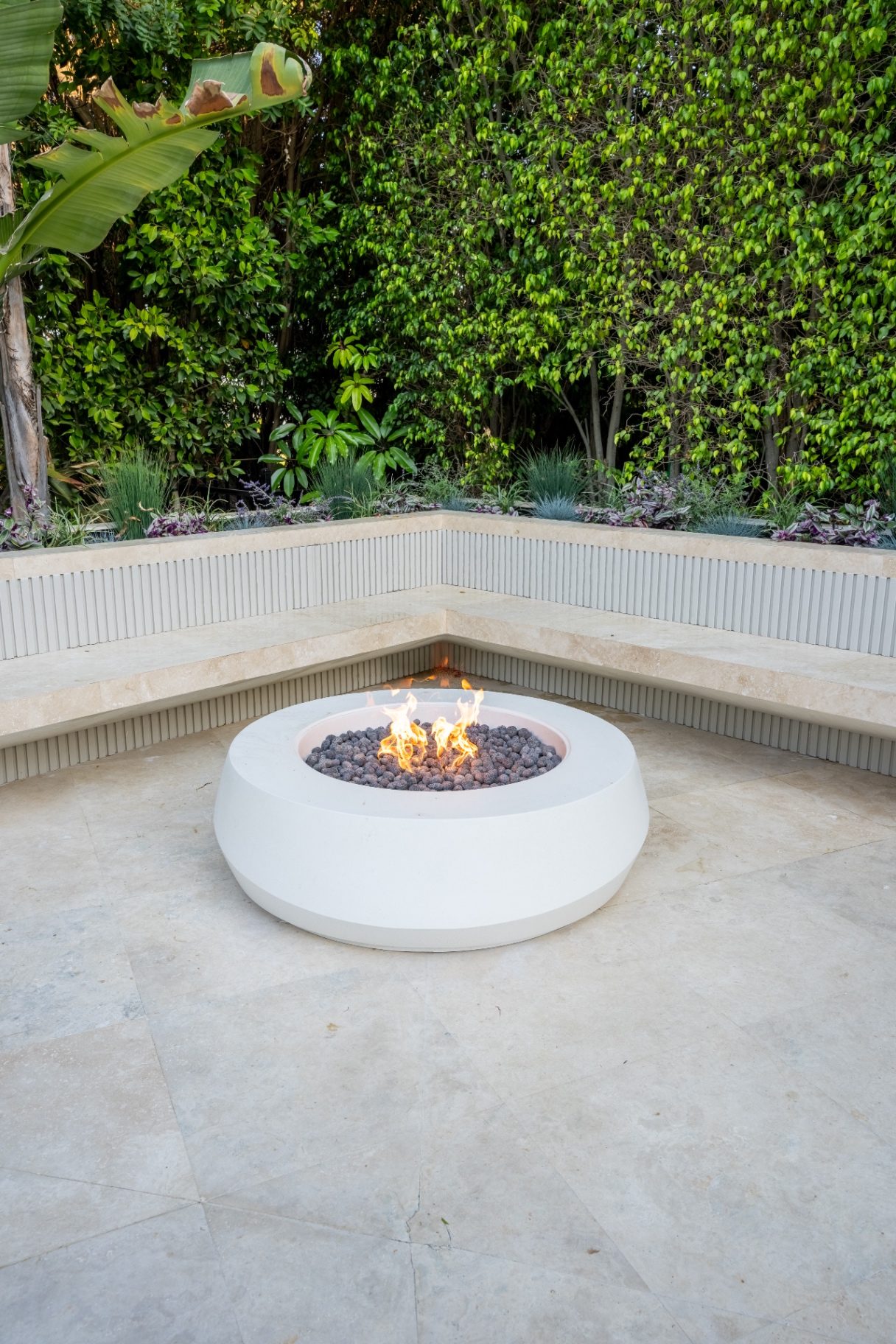
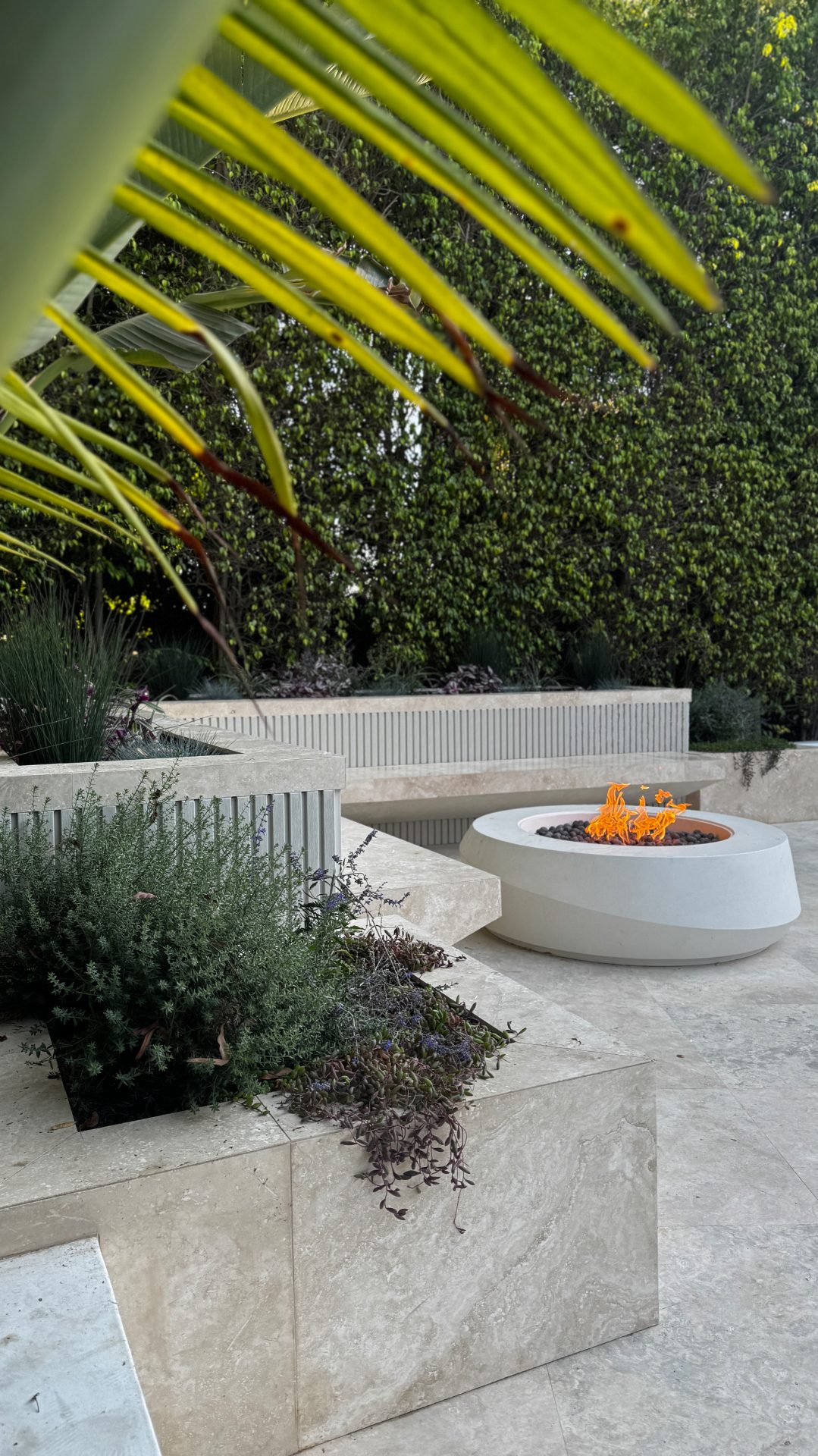
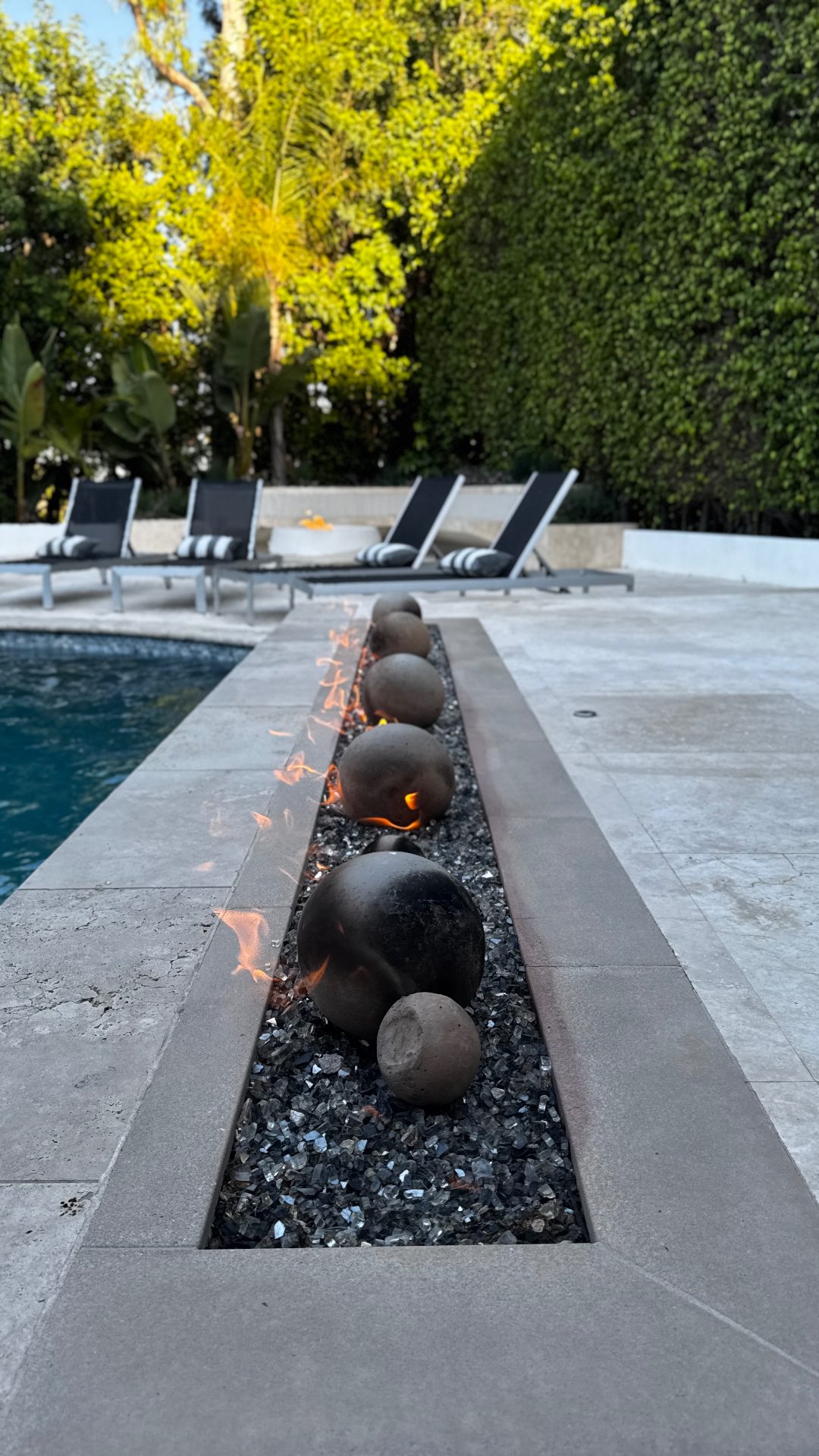
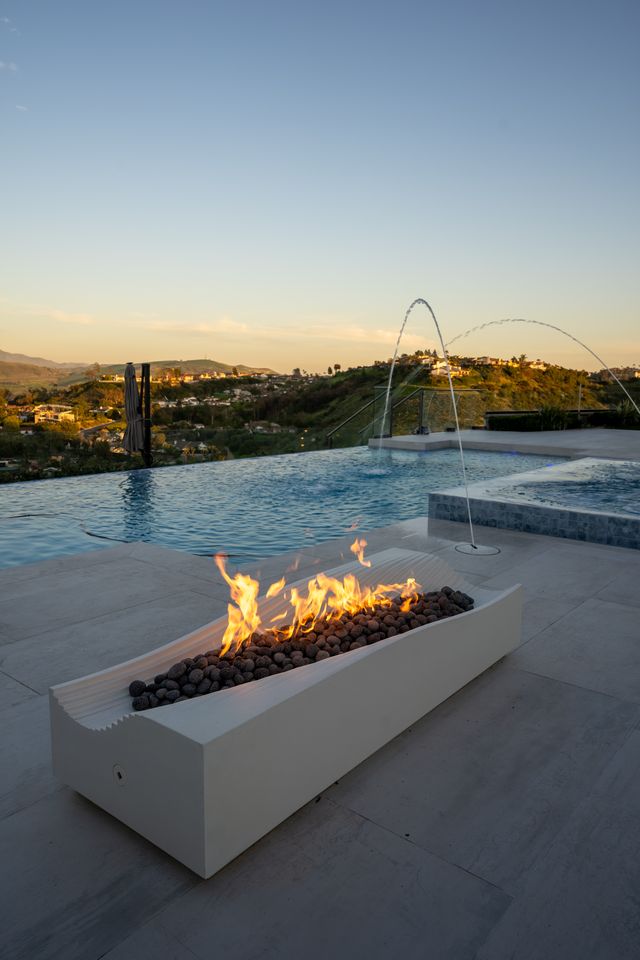
This is where wood has its edge—the organic, dancing flames and crackling sounds can't be fully replicated. But modern gas fire pits with fire glass, ceramic logs, or fire balls come remarkably close. And they do it without smoke blowing in your guests' faces.
When Wood Still Makes Sense
- Rural properties outside SCAQMD jurisdiction
- Large properties with fire pits far from structures
- Clients who specifically want the campfire experience and accept the limitations
- Portable fire pits for occasional use (no permit needed)
💡 Pro Tip
If you love the wood fire aesthetic but want gas convenience, consider a gas fire pit with ceramic log sets. They look remarkably realistic and give you that campfire visual without the smoke, ash, or restrictions.
We debated wood vs gas for months. Went gas. Zero regrets. We use it four nights a week because it's so easy. — Tony & Lisa R.
The Bottom Line
In Los Angeles, gas fire pits are the practical, legal, and lifestyle-friendly choice. Save the wood fires for camping trips and enjoy your backyard without restrictions.
Frequently Asked Questions
Are wood-burning fire pits legal in Los Angeles?
They're legal to own but can't be used during SCAQMD no-burn days, which can occur frequently during fire season and poor air quality periods.
Do gas fire pits give off enough heat?
Yes. A quality gas fire pit produces 40,000-80,000 BTU, enough to warm a 10-15 foot radius comfortably on LA evenings.
Can I convert a wood fire pit to gas?
Yes, conversion kits exist. But it's usually better to start fresh with a purpose-built gas fire pit for safety and aesthetics.
What type of gas is better—natural gas or propane?
Natural gas is preferred for permanent installations (cheaper to run, no tank refills). Propane works for portable or remote locations without gas lines.