Why Gunite Is the Default in California
Nearly every custom pool builder in Southern California works primarily in gunite (shotcrete), and there's a practical reason: gunite can be shaped to any geometry, engineered for hillside and seismic conditions, and finished with a wide range of interior materials. Fiberglass and vinyl are worth understanding, but they solve different problems.
Gunite: Fully Custom, Built to Last
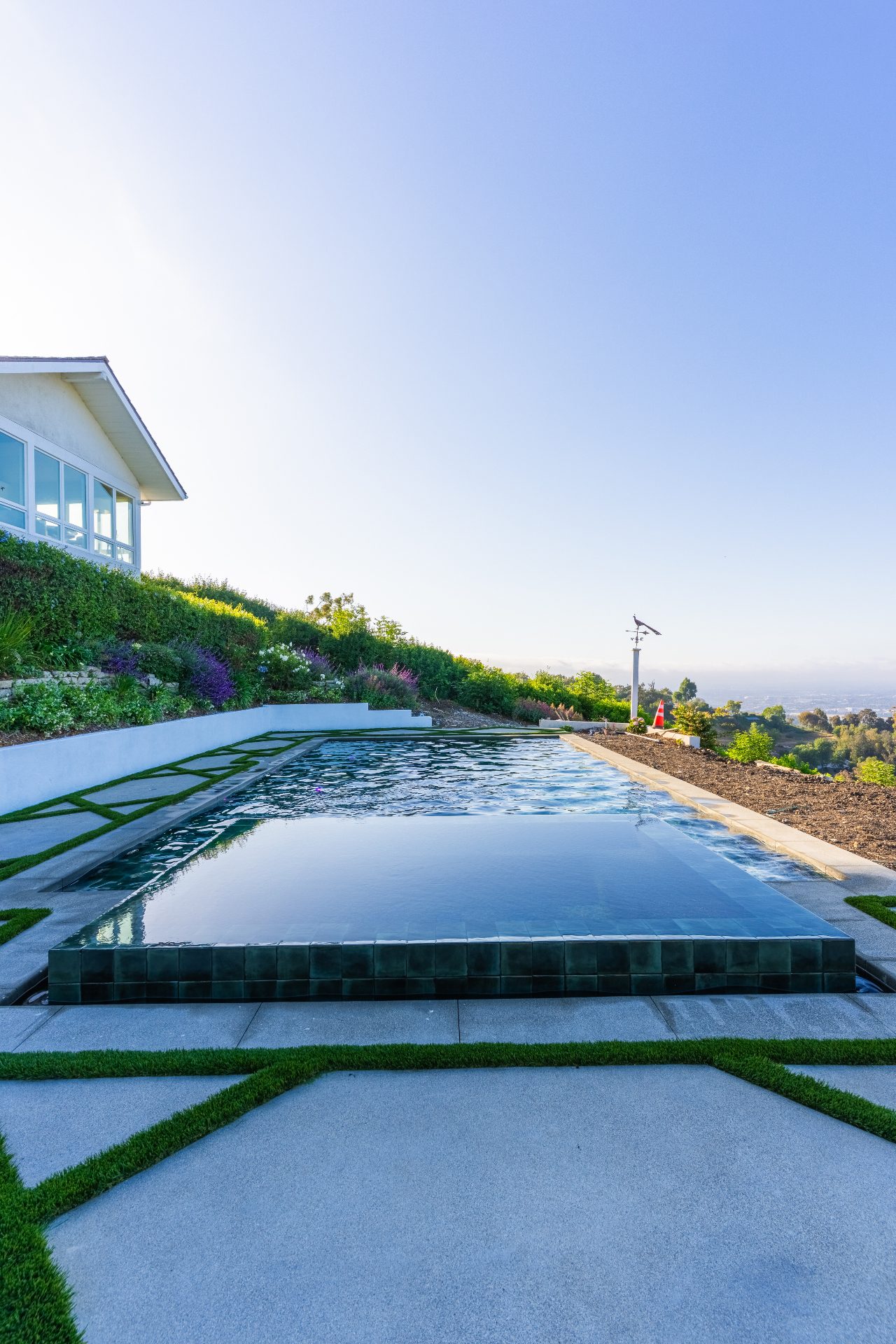
- Cost: standard 15×30 gunite pool $70,000–$110,000; premium builds $110,000–$180,000; hillside or infinity-edge $180,000–$400,000+
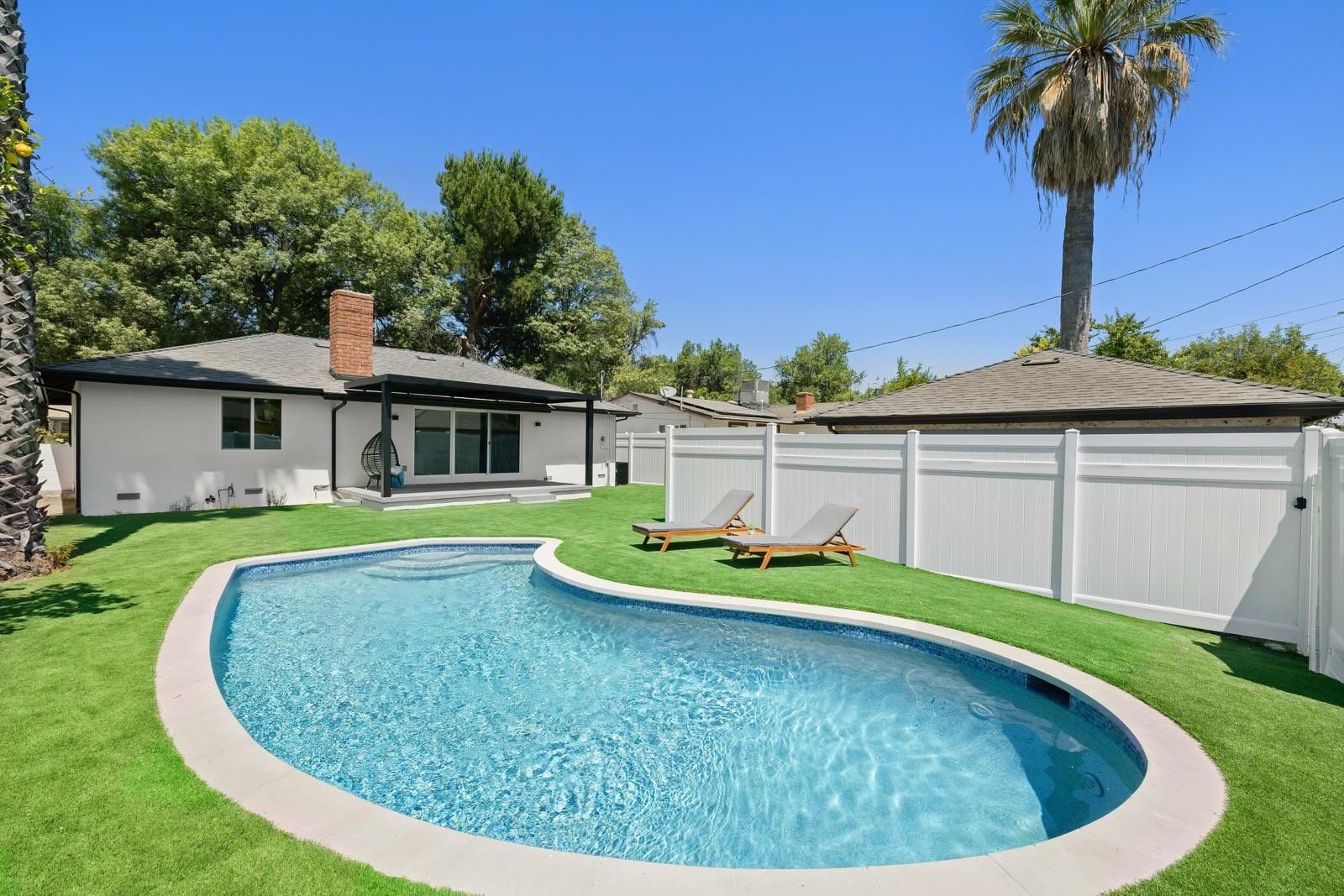
- Shape and size are fully custom — no mold constraints
- Structurally engineered per site, which matters on hillside lots and in seismic zones
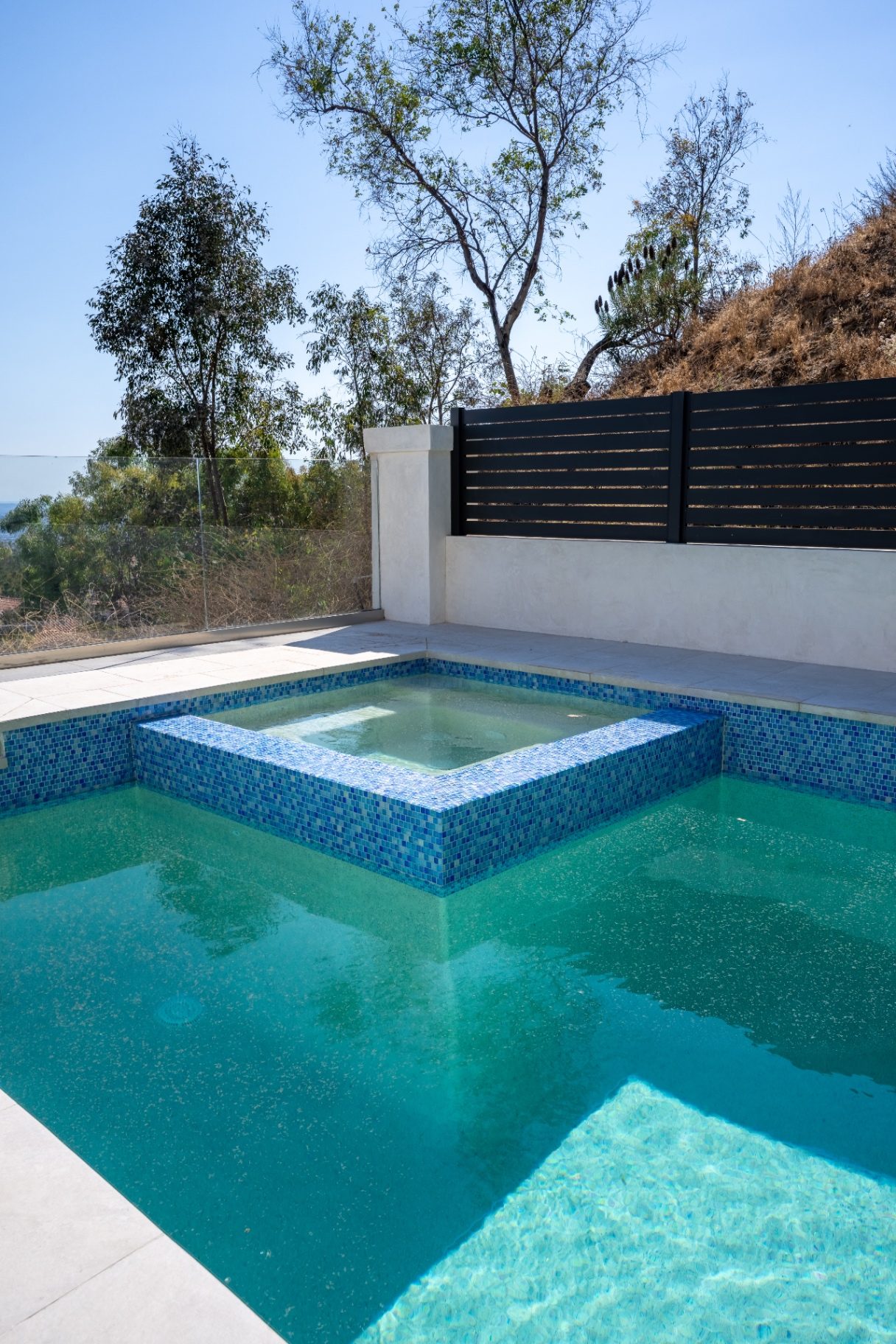
- Interior finish options range from standard plaster to pebble and quartz-blended finishes
- Lifespan: 30+ years for the shell with periodic replaster every 10–20 years depending on finish
Fiberglass: Faster Install, Fixed Shapes
- Pre-manufactured shell is trucked in and set in an excavated hole — installation is faster than gunite
- Limited to manufacturer shapes and sizes, which restricts custom hillside or unusual-lot designs
- Smooth gel-coat surface resists algae but can be harder to repair if damaged
- Less common among California custom builders because shape flexibility is usually a priority for hillside and view lots
Vinyl: Lowest Upfront Cost, Shorter Lifespan
- Lowest initial cost of the three, but the liner typically needs replacement every 7–15 years
- Less common in California's climate and market compared to the Midwest and East Coast
- Structural framework beneath the liner still needs engineering for hillside or seismic conditions
Why Southern California Homeowners Choose Gunite
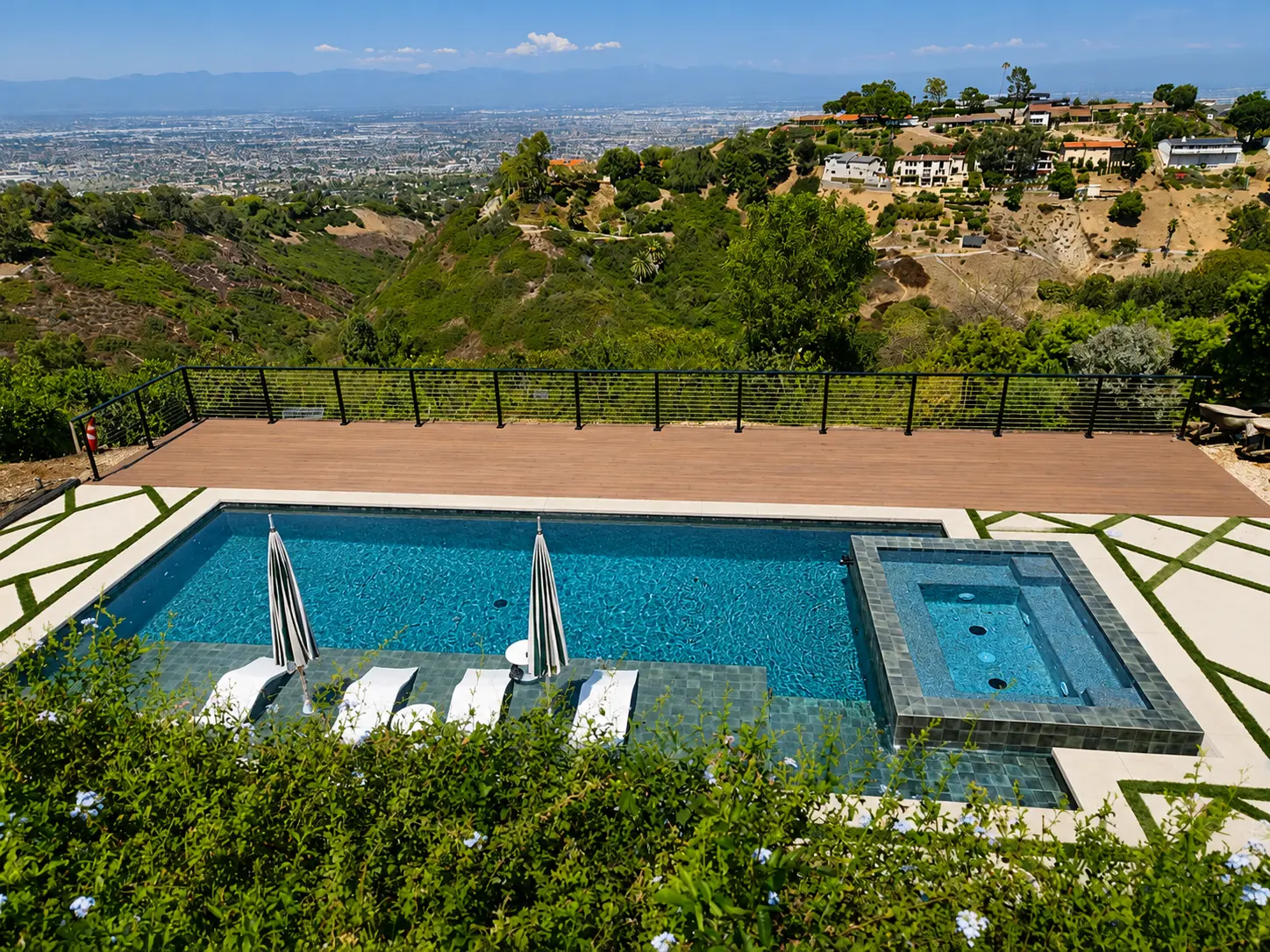
Most Southern California lots aren't flat rectangles — hillside grading, tight side yards, and view-oriented layouts are the norm. Gunite's ability to be shaped and engineered per site is the main reason it dominates the local market, even though it costs more upfront and takes longer to build than fiberglass.
💡 Pro Tip
If a contractor is pushing fiberglass primarily to save on install time, ask directly whether your lot's shape and grade actually accommodate a manufacturer's standard shell — many hillside lots don't.
Getting an Accurate Cost Comparison
Because gunite pricing depends heavily on size, finish, and site conditions, the most accurate way to compare options for your yard is the free /estimate tool. The /backyard-blueprint guide also walks through how shell type interacts with decking, tile, and equipment decisions.
Frequently Asked Questions
Which pool type is most common in California — gunite, fiberglass, or vinyl?
Gunite is the dominant choice in California because it can be custom-shaped and engineered for hillside and seismic conditions, which fits most Southern California lots better than pre-manufactured fiberglass shells.
Is fiberglass or gunite cheaper?
Fiberglass installation is often faster and can be less expensive upfront for a simple flat lot, but gunite's flexibility in shape and finish makes it the standard for custom Southern California builds.
How long does a vinyl pool liner last?
Vinyl liners typically need replacement every 7–15 years, compared to a gunite shell's 30+ year structural lifespan with periodic replaster.
Can fiberglass pools be installed on a hillside lot?
It's difficult. Fiberglass shells come in fixed manufacturer shapes and sizes, which limits their ability to accommodate the custom grading many hillside California lots require.
What does a gunite pool cost in California in 2026?
A standard 15×30 gunite pool runs $70,000–$110,000, premium builds with added features run $110,000–$180,000, and hillside or infinity-edge pools run $180,000–$400,000 or more.