Security Lighting Without the Prison Yard Look
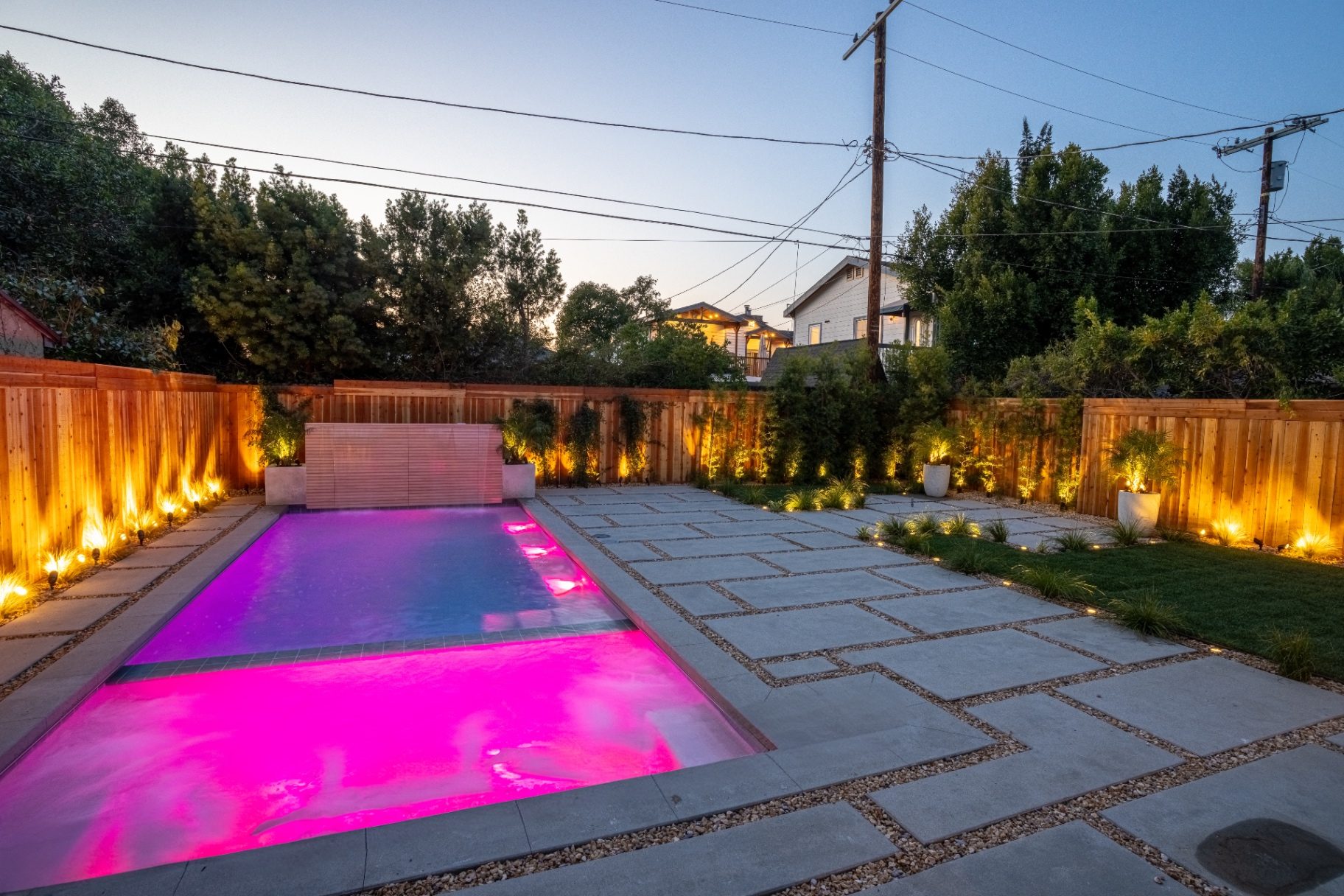
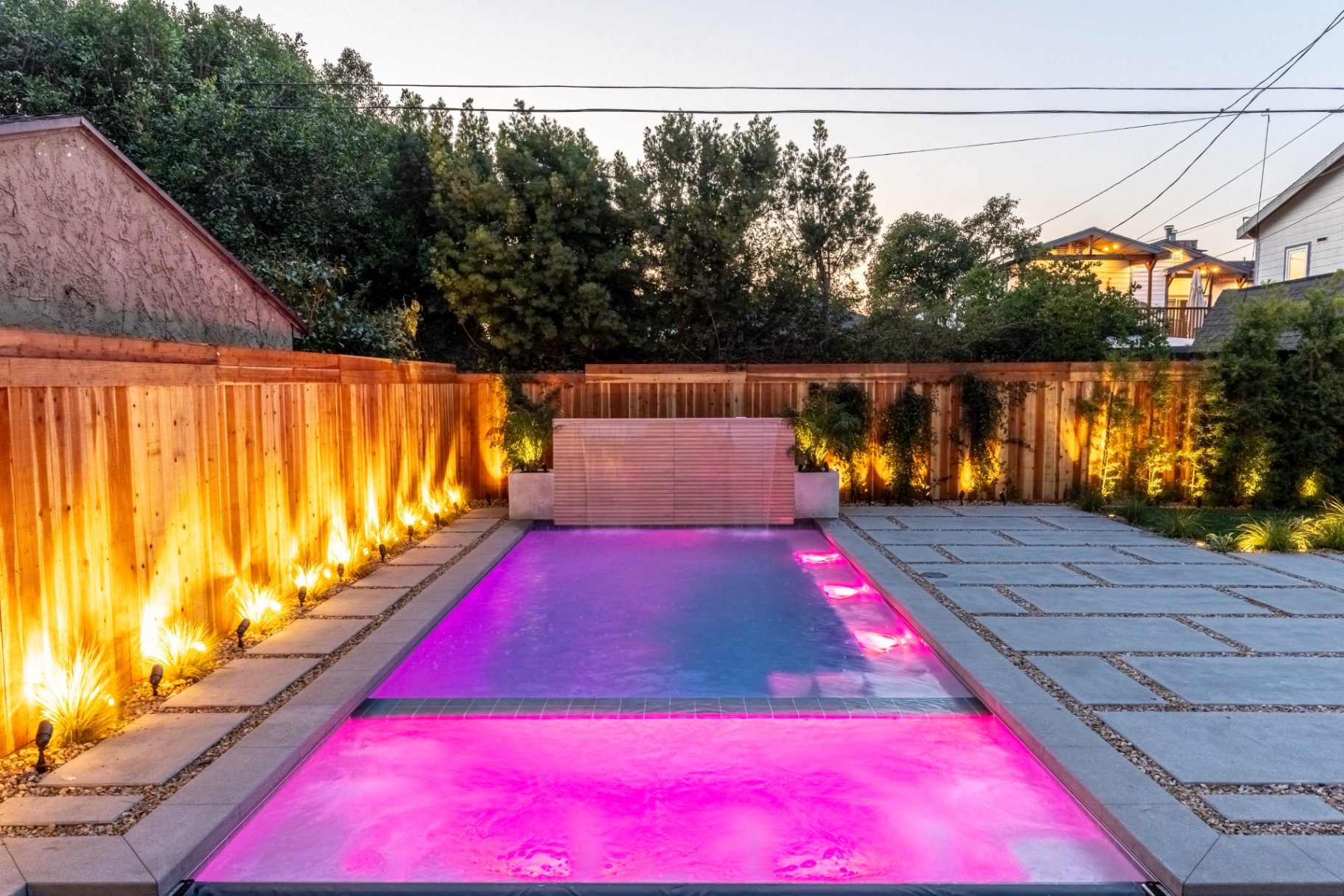
Nothing kills a beautiful backyard faster than a flood light bolted to the eave. I've seen million-dollar landscapes ruined by $50 security lights installed as an afterthought. The good news? Modern LED technology and smart design make it possible to have excellent security lighting that actually enhances your backyard's beauty.
The Two Biggest Mistakes
Mistake 1: Flood Lights Everywhere
Bright, wide-angle flood lights create harsh shadows, blind spots (ironically), and that institutional look. Effective security lighting is about coverage and layers, not raw brightness.
Mistake 2: Afterthought Installation
When security lighting is planned after the landscape is installed, you get exposed conduit, poorly placed fixtures, and designs that clash with the aesthetic. Integrate security lighting in the design phase.
5 Strategies That Work
1. Moonlighting as Security
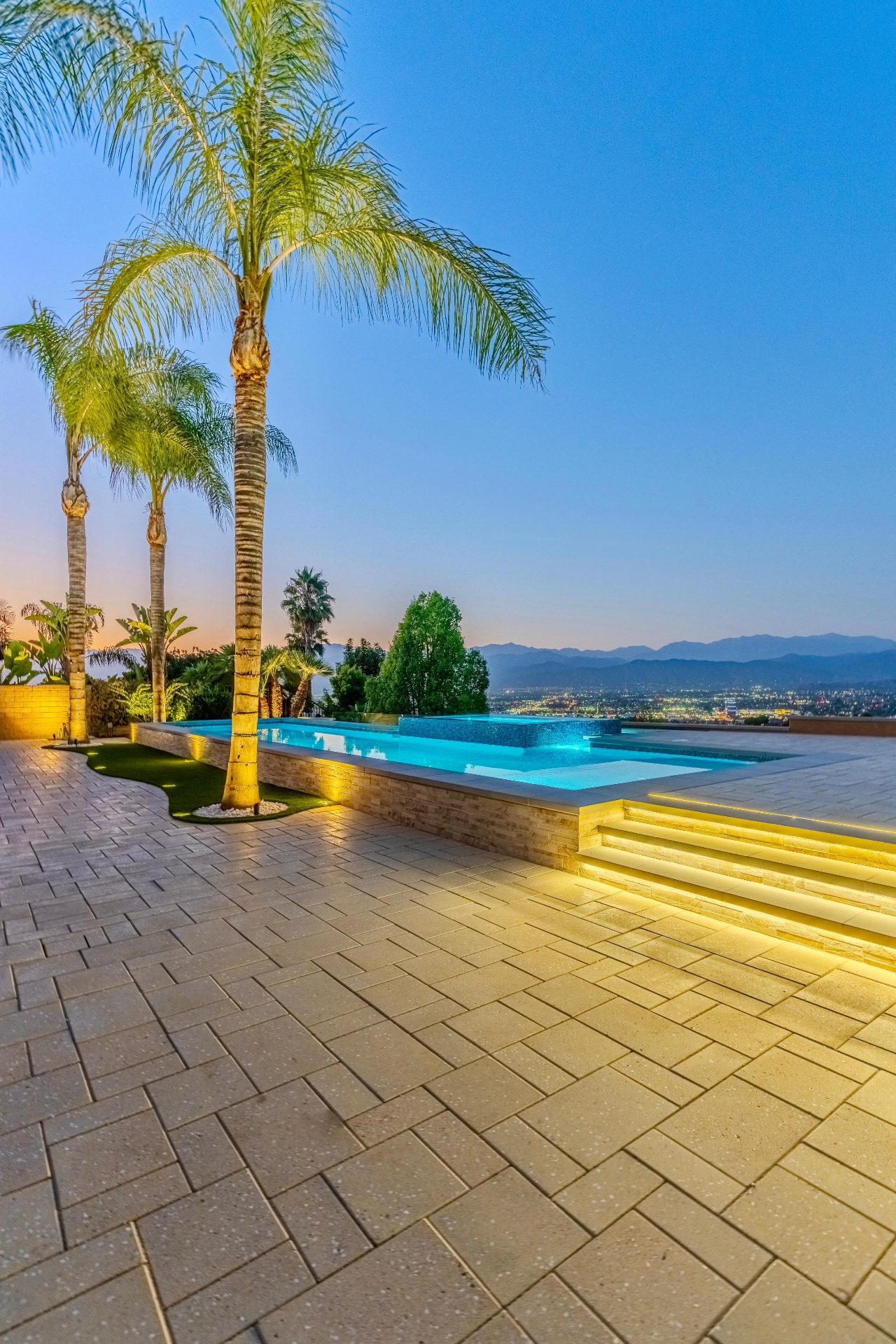
Fixtures mounted high in trees cast broad, natural-looking light across large areas. They're nearly invisible during the day and provide excellent coverage at night. This is our favorite dual-purpose technique.
2. Path Lights with Purpose
Path lights along walkways, gates, and entry points serve double duty—they guide guests and illuminate vulnerable access points. Use fixtures with 360-degree light distribution for maximum coverage.
3. Soffit and Eave Integration
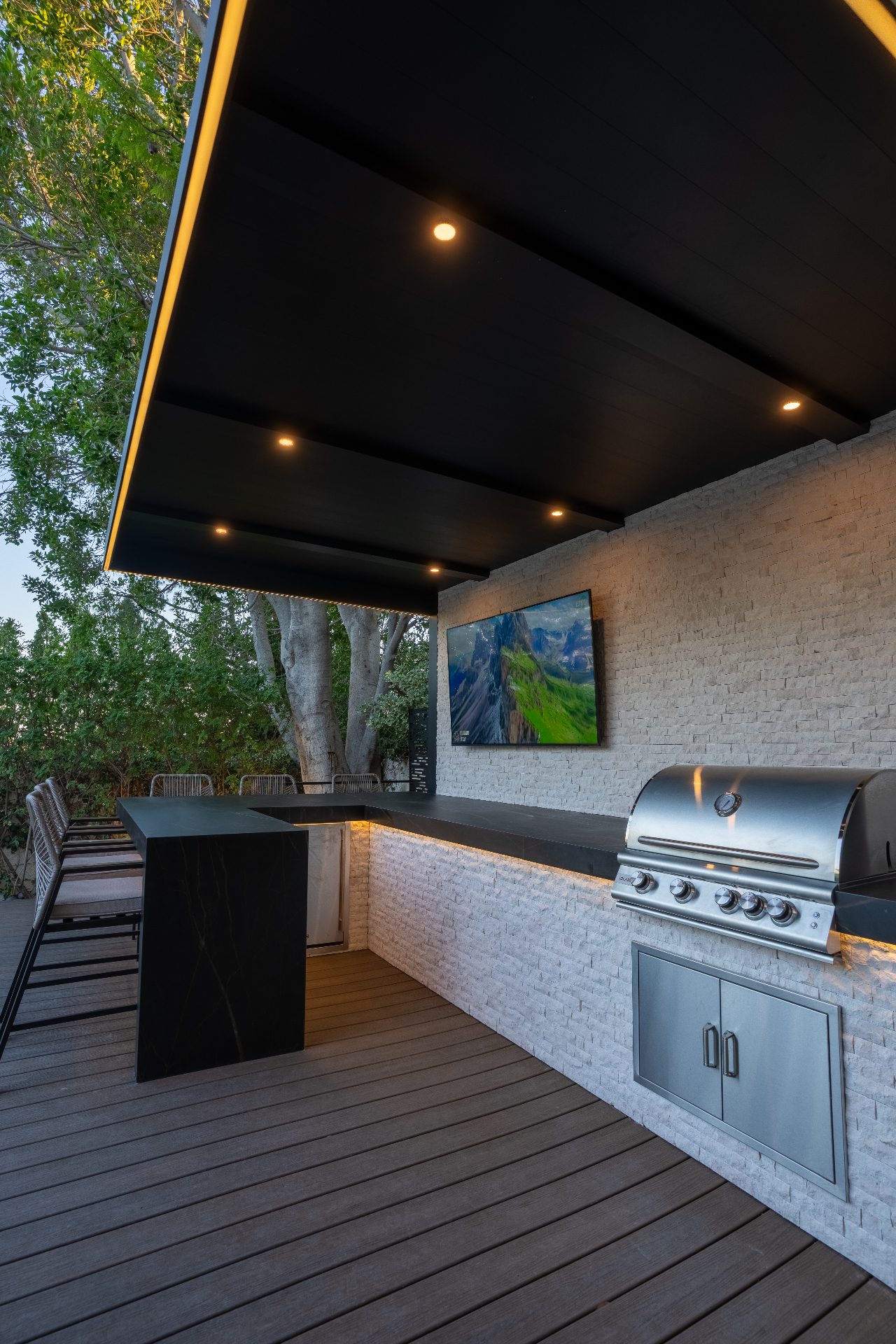
Recessed lights in soffits and eaves are invisible during the day and provide wide, even light across patio areas and building perimeters. Choose warm color temperatures (2700-3000K) to maintain ambiance.
4. Smart Motion Zones
Modern smart lights have adjustable motion zones—you define exactly where motion triggers a response. Set side gates and fence lines to full brightness on motion, while keeping the entertainment area on ambient settings.
5. Camera-Integrated Lighting
Brands like Ring, Arlo, and Lorex now integrate cameras with landscape-style fixtures. They look like normal path or wall lights but include wide-angle cameras and smart alerts.
Smart Security Lighting Costs
- Moonlighting installation (3-5 trees): $1,500-$4,000
- Smart motion path lights (8-12 fixtures): $2,000-$5,000
- Soffit recessed lighting (10-15 fixtures): $2,000-$4,500
- Camera-integrated fixtures (4-6 units): $2,000-$6,000
- Smart controller with zones and scheduling: $500-$1,500
- Total integrated security lighting: $5,000-$15,000
💡 Pro Tip
Never illuminate your backyard with a single color temperature. Use 2700K for entertaining areas and 3000-4000K for perimeter security zones. The subtle temperature shift signals 'safe edge' without harsh contrasts.
LA-Specific Considerations
LA's light pollution ordinances (LAMC 93.0117) limit the brightness and direction of exterior lighting. Fixtures must be shielded to prevent light trespass onto neighboring properties. This actually helps design—it forces downward-directed lighting that looks better anyway.
For hillside properties, lighting design must consider both the view from above (neighbors looking down) and below (street-level visibility). A good lighting designer balances all sightlines.
I told Elan I wanted security lighting and he said 'you already have it.' Every landscape light he installed serves both purposes. — Michelle D.
Frequently Asked Questions
Can landscape lighting double as security lighting?
Absolutely. Well-designed landscape lighting provides excellent security coverage while maintaining aesthetic appeal. The key is layered coverage across all zones.
What color temperature is best for security lighting?
3000-4000K for perimeter and security zones. This provides clear visibility without the harsh, bluish look of higher temperatures.
Do I need separate security and landscape lighting systems?
Not necessarily. Smart controllers can manage both from one system—ambient scenes for entertaining and bright, motion-triggered modes for security.
How much does integrated security lighting add to a project?
When planned during the design phase, integrated security lighting adds $3,000-$8,000 to a landscape lighting budget. Retrofitting costs 2-3x more.