Pergola Permits: When You Need Them
Not every pergola needs a permit, but most do. The rules vary by city, but here's the general framework for Los Angeles County:
- Under 120 sq ft, freestanding, no electrical: Usually exempt
- Over 120 sq ft: Permit required in most cities
- Attached to house: Almost always requires permit
- Has electrical (lights, fans, heaters): Electrical permit required
- Solid roof: Often triggers additional requirements
When in doubt, call your city's building department. Better to ask than get a stop-work order mid-project.
Setback Requirements
Setbacks are how far structures must be from property lines. For pergolas, typical requirements:
- Rear setback: 5-10 feet from property line
- Side setback: 3-5 feet from property line
- Front setback: Usually can't extend past house front
- Pool setback: 3-5 feet from pool edge
These vary significantly by zone and city. Hillside properties often have additional restrictions. We check setbacks before designing to avoid impossible plans.
Height Limits
Most residential zones limit accessory structures to 12-15 feet. Pergolas typically fall under these rules:
- Maximum height: Usually 12-15 feet from grade
- Must not exceed main house height
- Hillside zones may have additional view corridor requirements
- HOAs often have stricter limits than city code
💡 Pro Tip
If you're in an HOA, get their approval before city permits. Many HOAs have design review that's stricter than building code.
Electrical Requirements
Adding electrical to your pergola (lights, fans, outlets, heaters) triggers electrical permit requirements:
- Dedicated circuit usually required (20-amp minimum)
- GFCI protection for all outdoor outlets
- Weatherproof boxes and fixtures required
- Proper wire burial depth (18-24" depending on conduit)
- Inspection before covering wiring
We run electrical during pergola construction, not after. It's cleaner and passes inspection easier.
Attached vs. Freestanding
Attaching a pergola to your house changes the requirements:
Freestanding Pergolas
- Own foundation/footings required
- Easier permitting in most cases
- No structural modifications to house
- Can sometimes avoid permit if small enough
Attached Pergolas
- Must attach to house structure properly (not just siding)
- Engineering often required to show load path
- Waterproofing at attachment point critical
- Almost always requires permit
Attached pergolas create a cleaner look but add complexity. We do both regularly—the right choice depends on your house and yard.
Solid Roof Considerations
Solid roof pergolas (as opposed to lattice) have additional requirements:
- May count toward lot coverage calculations
- Drainage planning required (where does rain go?)
- May trigger room addition rules if enclosed later
- Wind load engineering more critical
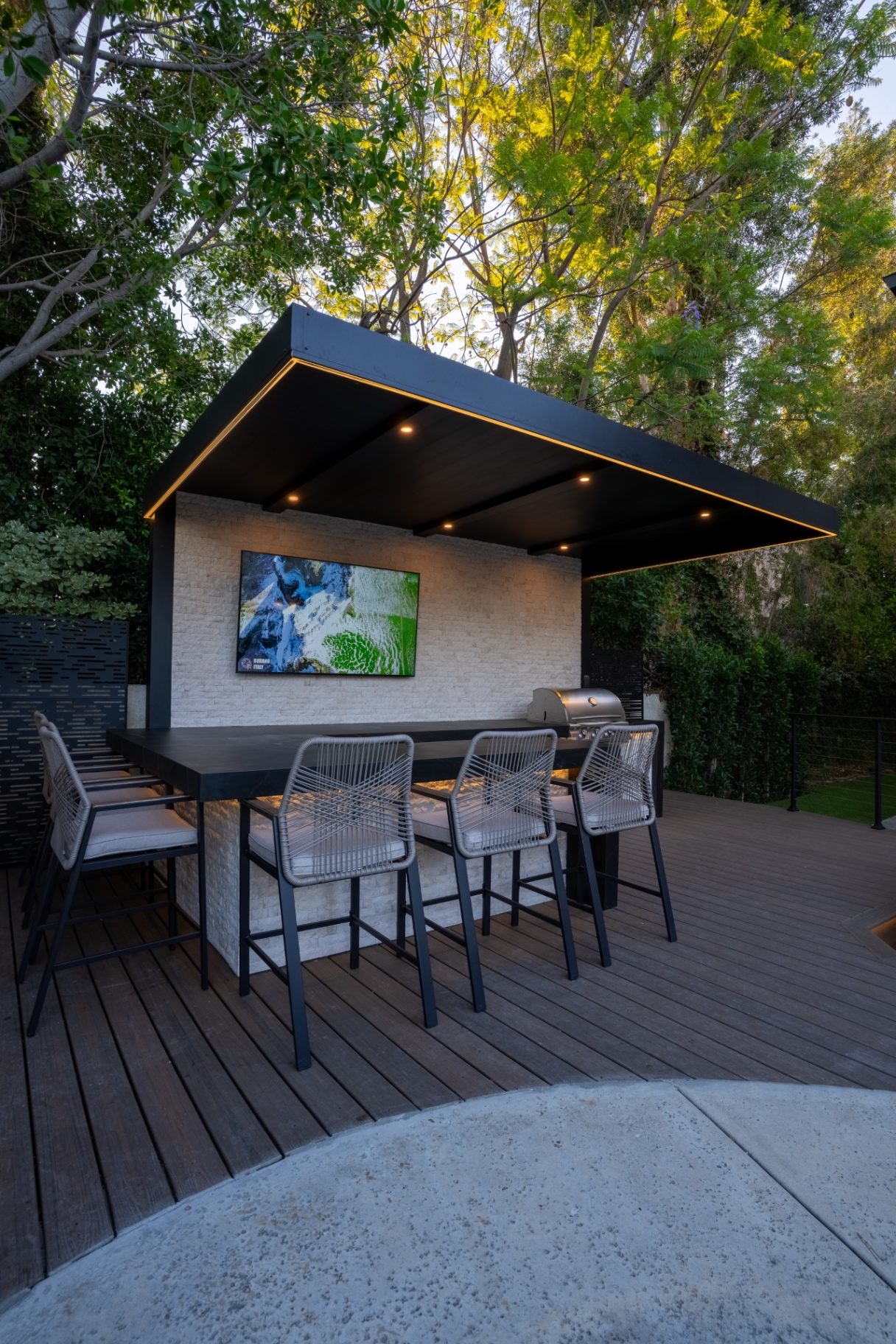
Solid roofs are popular for LA's sunny climate, but plan drainage carefully. We integrate gutters and downspouts into the design.
Our pergola passed inspection first try. Elan's team handled all the permits and knew exactly what the city wanted. — Christine A., via Google
Working with HOAs
If you're in an HOA, you have two approval processes: the city AND your association. HOA requirements often include:
- Architectural review board approval
- Material and color specifications
- Setback requirements stricter than city
- Height limits stricter than city
- Sometimes neighbor notification requirements
Start with HOA approval, then move to city permits. Don't pay for city plans until HOA approves the design.
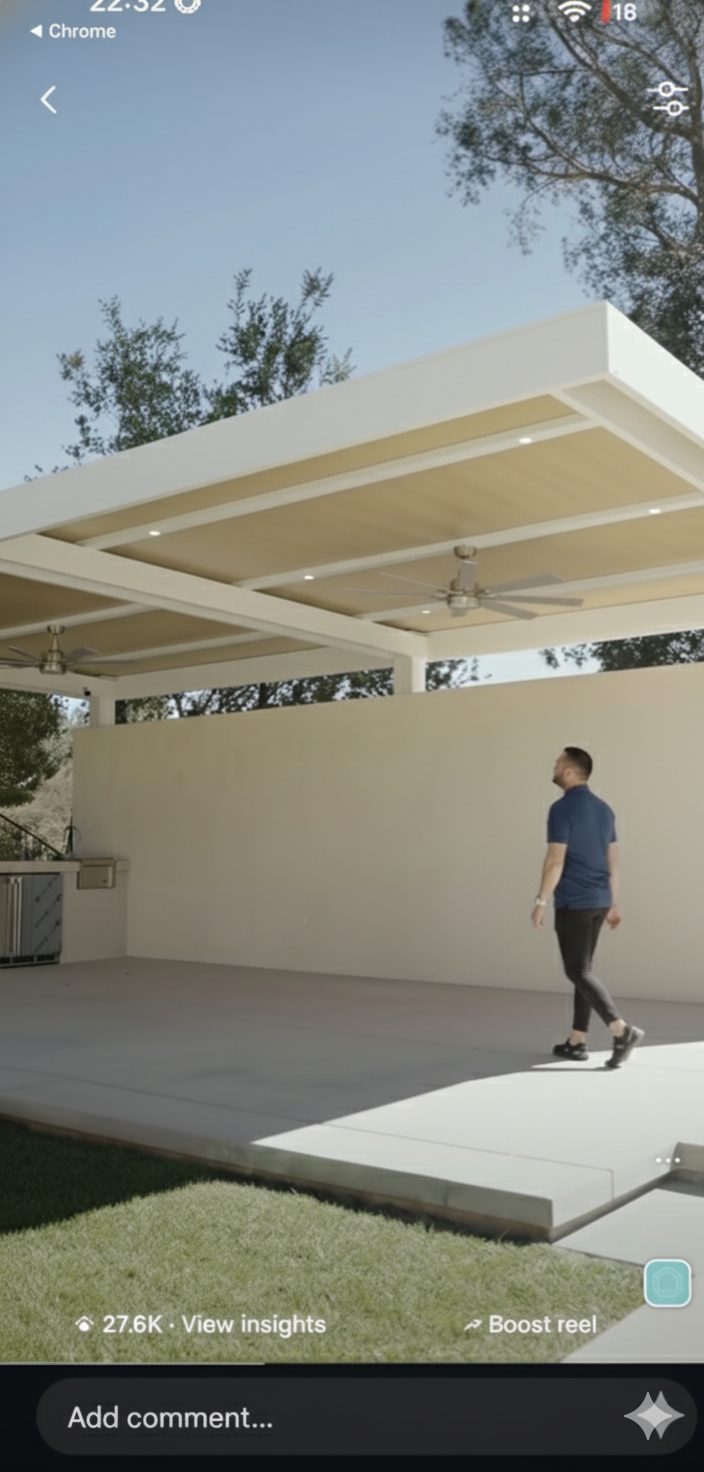
Watch the Transformation
Frequently Asked Questions
Do I need a permit for a pergola in Los Angeles?
Usually yes if over 120 sq ft, attached to house, or has electrical. Small freestanding pergolas may be exempt.
How close can a pergola be to my property line?
Typically 3-5 feet from side property lines and 5-10 feet from rear. Check your specific city and zone.
What's the maximum height for a pergola?
Usually 12-15 feet depending on city and zone. Hillside and HOA properties often have additional restrictions.
Does adding lights to a pergola require a permit?
Yes—electrical work requires an electrical permit and inspection in all LA County cities.
Should I get an attached or freestanding pergola?
Attached looks cleaner but requires engineering and always needs permits. Freestanding is easier to permit and doesn't affect your house structure.