Materials Make or Break an Outdoor Kitchen
Here's something I see constantly: gorgeous outdoor kitchens that start falling apart in 3-5 years because someone chose the wrong materials. Indoor materials don't survive outdoors. Cheap outdoor materials don't survive LA's UV intensity. And coastal properties face salt air that attacks everything.
After building hundreds of outdoor kitchens across Los Angeles, I know exactly what works, what fails, and what gives you the best long-term value. Let me save you from expensive mistakes.
Island Frame Construction
Concrete Block (CMU)
The traditional choice and still the most durable. Concrete block islands with rebar and grout fill are essentially permanent structures. They handle heat, moisture, and seismic movement without issue.
- Cost: $3,000-$6,000 for a standard island
- Pros: Fireproof, moisture-proof, lasts 30+ years
- Cons: Heavier (may need thicker pad), slower to build, not easily modified
Welded Steel Frame
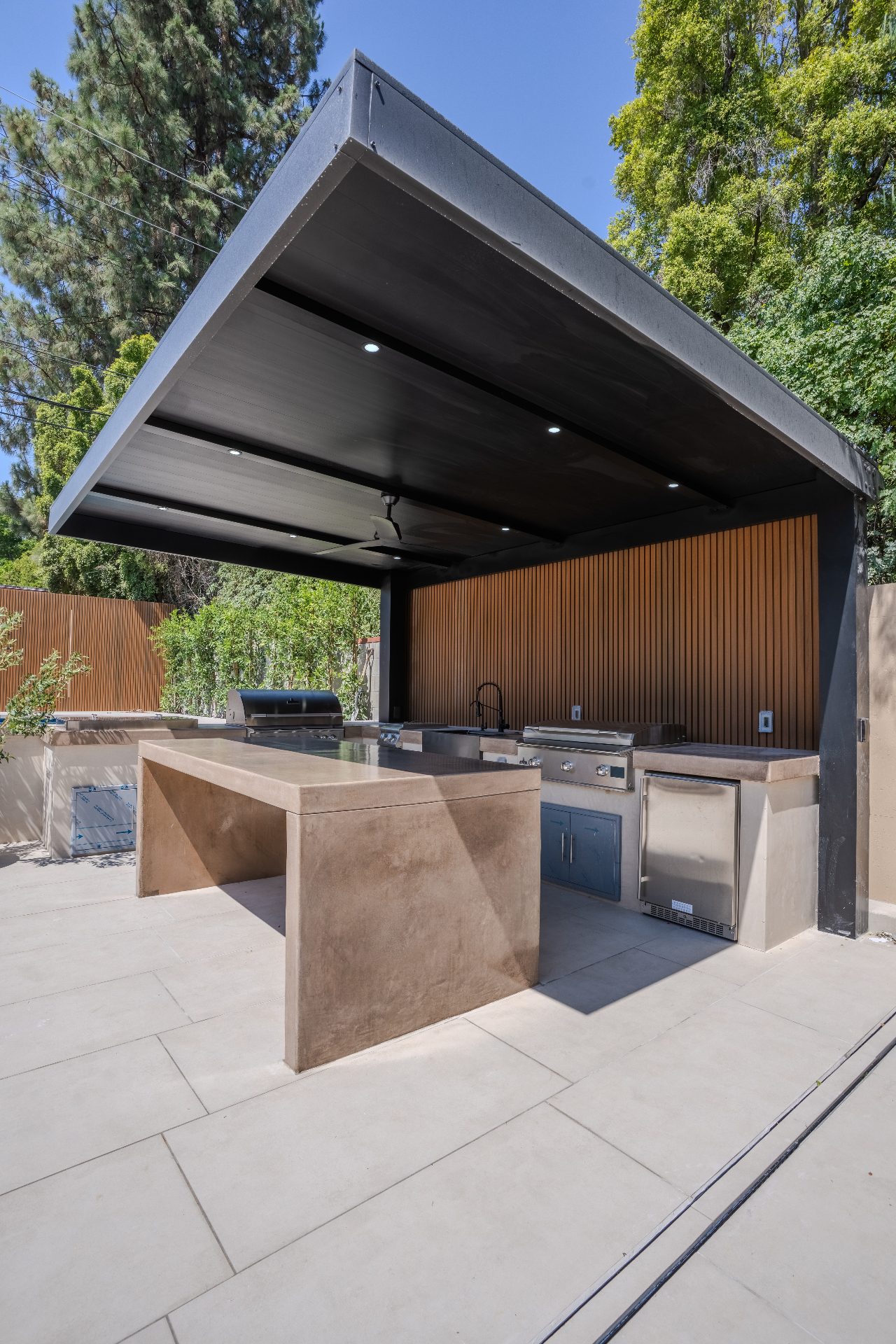
Lighter than block, faster to install, and allows for more creative shapes. Powder-coated steel frames are our go-to for premium builds.
- Cost: $2,500-$5,000 for a standard island
- Pros: Lighter, faster, design flexibility, easy to modify
- Cons: Must be properly coated to prevent rust, less fire-resistant than block
Modular/Prefab Systems
Pre-engineered panels that bolt together. Fastest installation (1-2 days vs. 1-2 weeks) but most limited in customization.
- Cost: $4,000-$8,000 for a complete system
- Pros: Fastest install, engineered for outdoor use, consistent quality
- Cons: Limited size/shape options, harder to repair, cookie-cutter look
Veneer and Finish Materials
The exterior finish is what you see every day. Choose wrong and you're re-doing it in 5 years.
Natural Stone Veneer
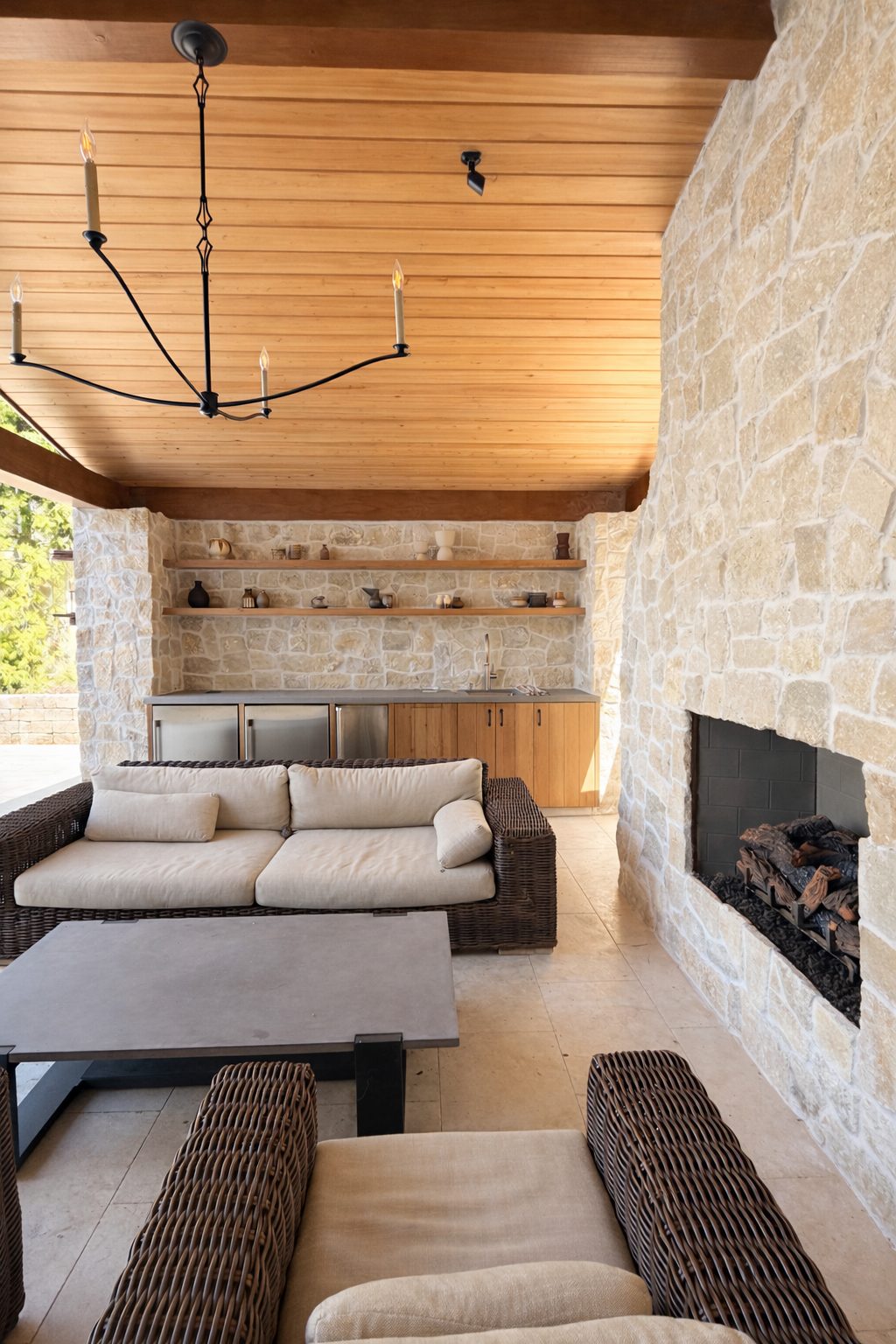
Stacked stone, ledger stone, or full-thickness stone veneer. Beautiful and durable when installed correctly with proper waterproofing behind it.
- Cost: $25-$45/sq ft installed
- Lifespan: 20+ years
- Best for: Traditional, Mediterranean, rustic designs
Stucco
The most common exterior finish in LA outdoor kitchens. Matches the house, takes color well, and is very cost-effective. Use a smooth or light sand finish for modern looks.
- Cost: $12-$20/sq ft installed
- Lifespan: 15-20 years with maintenance
- Best for: Modern, contemporary, matching existing home
Porcelain Tile
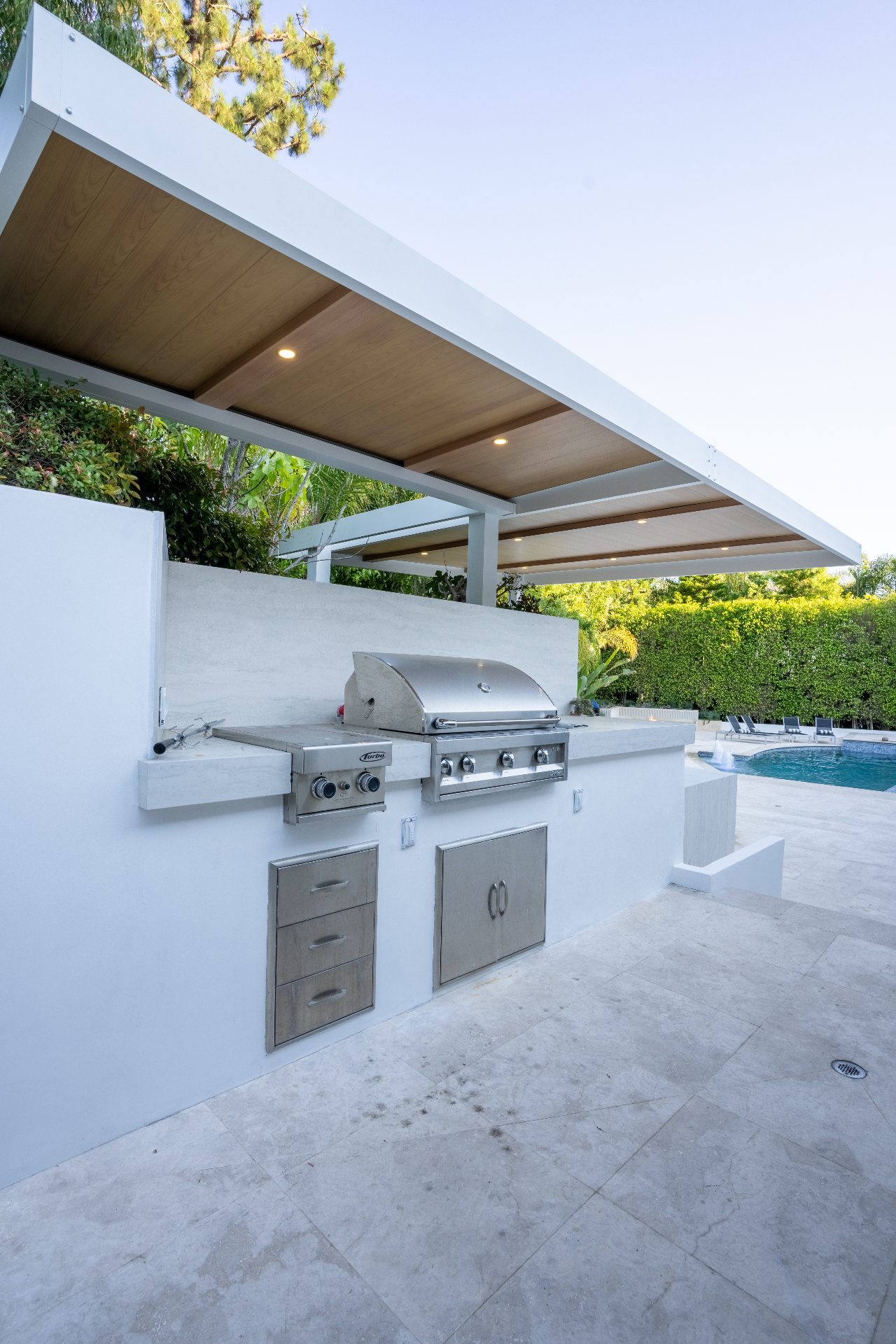
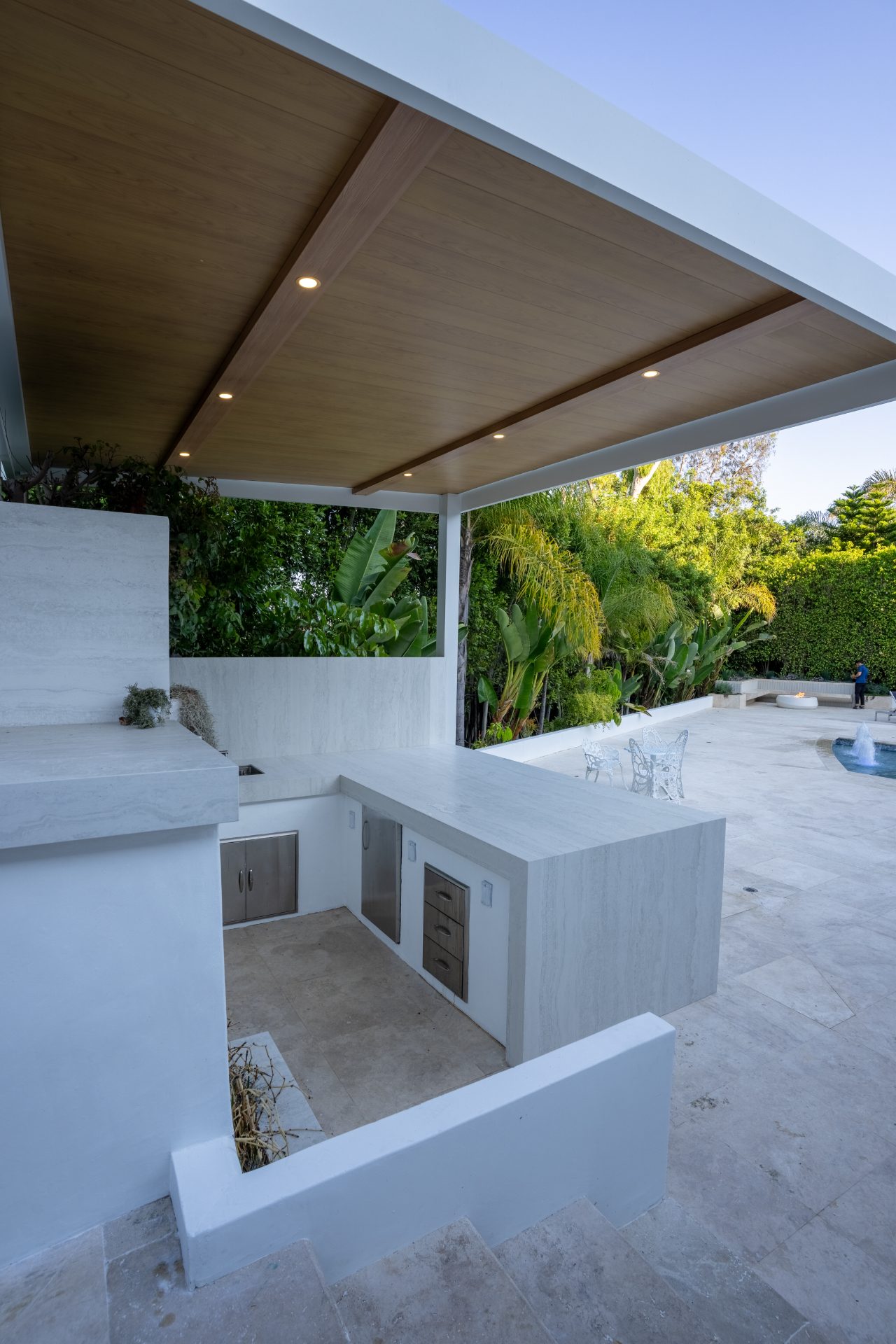
Large-format porcelain tiles applied over a waterproofed substrate. Gives a sleek, modern look and is nearly maintenance-free.
- Cost: $30-$50/sq ft installed
- Lifespan: 25+ years
- Best for: Modern/contemporary, coastal properties (salt-resistant)
Materials That FAIL in LA
Avoid these—I've seen them fail repeatedly:
- Standard quartz countertops: UV rays cause discoloration and cracking within 2-3 years. Use porcelain or granite instead.
- Untreated wood: Even cedar and redwood need annual treatment. Without it, LA sun destroys wood in 3-5 years.
- Indoor-grade stainless: 430 stainless rusts quickly in coastal areas. Specify 316 marine-grade for any property within 5 miles of the ocean.
- Standard grout: Absorbs moisture, stains, and cracks. Use epoxy grout for all outdoor tile work.
- Laminate or composite countertops: Designed for indoors. Delaminates and warps with UV and heat exposure.
Coastal vs. Inland Material Choices
Properties within 5 miles of the coast face salt air corrosion. Material adjustments:
- Stainless steel: Must be 316 marine grade (not 304)
- Hardware: Use stainless or marine-grade hardware throughout
- Iron/steel: Avoid exposed iron. Use aluminum or powder-coated steel
- Stone: Natural stone holds up well. Avoid limestone (porous, absorbs salt)
- Wood: Teak or ipe only. Everything else deteriorates rapidly
💡 Pro Tip
When in doubt, choose porcelain. Porcelain countertops, porcelain tile veneer, porcelain pavers—it's nearly indestructible, UV-stable, and looks great for decades. It's become our default recommendation for a reason.
Investment in Materials vs. Replacement Costs
Here's the math that matters:
- Cheap countertop that fails in 5 years: $3,000 + $4,000 replacement = $7,000 over 10 years
- Quality countertop that lasts 20+ years: $5,000 over 20 years
- Cheap veneer that cracks in 7 years: $4,000 + $5,000 re-do = $9,000 over 14 years
- Quality stone veneer that lasts 25+ years: $6,000 over 25 years
Spending 30-50% more on materials upfront saves money long-term and eliminates the hassle of rebuilding.
Elan talked us out of the marble countertop and into porcelain. Two years later, it still looks brand new. Our neighbor's marble is already staining. Right call. — Chris & Diana K.
Frequently Asked Questions
What's the best countertop material for an outdoor kitchen?
Porcelain slab or granite. Both handle UV, heat, and moisture. Avoid standard quartz—it degrades outdoors.
Does outdoor kitchen material choice differ for coastal properties?
Yes. Coastal homes need 316 marine-grade stainless, salt-resistant stone, and avoided iron. Standard materials corrode within 2-3 years near the coast.
How long should an outdoor kitchen last?
With proper materials: 20-30+ years for the structure, 15-25 years for finishes, and 10-15 years for appliances. Cheap materials cut these lifespans in half.
Is natural stone or stucco better for outdoor kitchen islands?
Both are excellent. Stone costs more ($25-$45/sq ft vs. $12-$20/sq ft) but lasts longer. Stucco matches most LA homes and is very cost-effective.