Why Sealing Your Hardscape Matters in LA
LA's climate is tough on hardscape in ways most people don't realize. Intense UV degrades sealers and fades colors. Santa Ana winds deposit fine dust that works into porous surfaces. Pool splash-out introduces chlorinated water that can stain and etch stone. And when it does rain in LA, unsealed surfaces absorb water that leads to efflorescence (those white mineral deposits).
Proper sealing protects against all of this. It's one of the simplest maintenance tasks that delivers the highest return on your hardscape investment.
Sealing by Material Type
Travertine
Travertine is porous and loves to absorb stains. Seal it within 30 days of installation with a penetrating sealer (not a topical/coating sealer). Reseal every 2-3 years. Cost: $2-$4 per square foot for professional application.
- Sealer type: Penetrating/impregnating (not film-forming)
- Frequency: Every 2-3 years
- Best products: Miracle Sealants 511, StoneTech BulletProof
- DIY vs. pro: DIY-friendly with a pump sprayer
- Cost: $0.50-$1/sq ft DIY, $2-$4/sq ft professional
Concrete Pavers
Concrete pavers benefit from sealing but can also look great unsealed. Sealing enhances color, locks joint sand, and prevents weed growth between pavers. Use a joint-stabilizing sealer for best results.
- Sealer type: Joint-stabilizing sealer (locks sand, repels weeds)
- Frequency: Every 3-5 years
- Best products: Techniseal, SEK Surebond Paver Seal
- Finish options: Matte (natural look) or wet-look (enhanced color)
- Cost: $1-$3/sq ft professional
Stamped Concrete
Stamped concrete must be sealed—it's non-negotiable. The sealer protects the color release and provides the glossy finish that makes stamped concrete look like stone. Without sealer, it fades and weathers quickly.
- Sealer type: Acrylic-based (solvent or water-based)
- Frequency: Every 2-3 years
- Best products: Foundation Armor SX5000, Sherwin-Williams H&C
- Application: Roller or sprayer, 2 coats
- Cost: $1.50-$3.50/sq ft professional
Natural Stone (Flagstone, Bluestone, Slate)
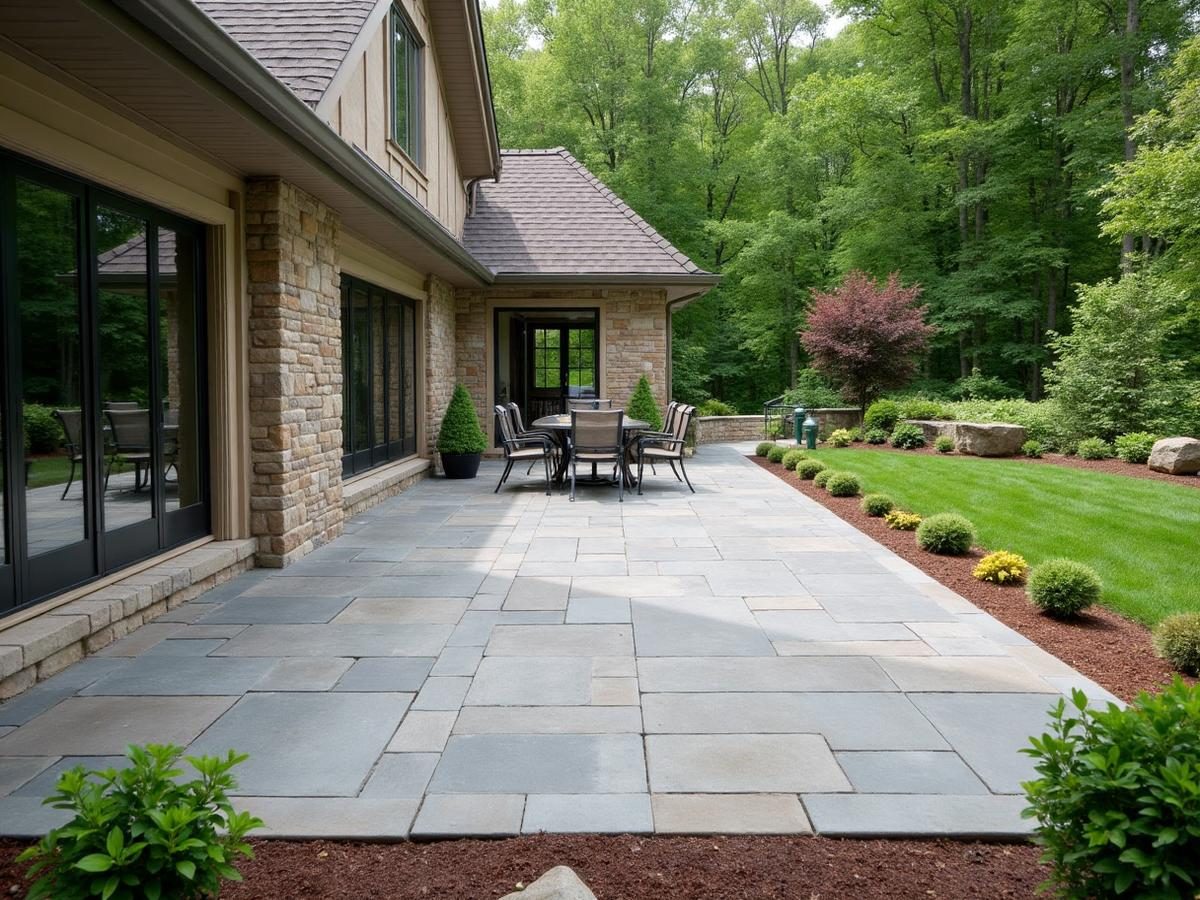
Natural stone is incredibly variable. Dense stones like bluestone barely need sealing. Porous stones like flagstone and sandstone need it urgently. Test by dropping water on the surface—if it absorbs within 30 seconds, seal it.
How to Seal: The Process
- Clean thoroughly: Pressure wash at 2,500-3,000 PSI. Remove all dirt, stains, and previous sealer residue.
- Allow to dry: Wait 24-48 hours after cleaning. Surface must be completely dry.
- Apply sealer: Use a pump sprayer or roller. Apply in thin, even coats.
- Second coat: Wait 2-4 hours, apply a second coat perpendicular to the first.
- Cure time: Keep foot traffic off for 24 hours. No water for 48 hours.
- Joint sand (pavers): Apply polymeric sand to joints after sealing if needed.
When NOT to Seal
- New concrete: Wait 30 days for concrete to fully cure before sealing
- Wet surfaces: Never apply sealer to damp stone or concrete
- Temperatures below 50°F or above 95°F: Sealer won't cure properly
- Direct sun: Apply in early morning or late afternoon to prevent flash drying
💡 Pro Tip
The biggest sealing mistake is applying too much. Heavy coats create a plastic-looking film that peels, traps moisture, and actually damages the surface. Two thin coats always outperform one thick coat.
We sealed our travertine pool deck after Elan's recommendation. Three years later, it still looks like installation day. Worth every penny. — Brian & Stacy H.
Frequently Asked Questions
How often should I seal my pavers?
Concrete pavers every 3-5 years. Travertine every 2-3 years. Stamped concrete every 2-3 years. Frequency depends on sun exposure and foot traffic.
Can I seal hardscape myself?
Yes, DIY sealing is feasible with a pump sprayer and quality sealer. The key is thorough cleaning beforehand and thin, even application.
What happens if I don't seal my travertine?
Unsealed travertine absorbs stains, develops efflorescence (white deposits), and weathers faster. It'll still last, but it won't look as good.
Does sealing make pavers slippery?
Some sealers can reduce traction, especially when wet. Choose a sealer with anti-slip additive for pool decks and sloped surfaces.